Identity
Technical notes (click to open)(click to close)
Name & Human History
Etymology
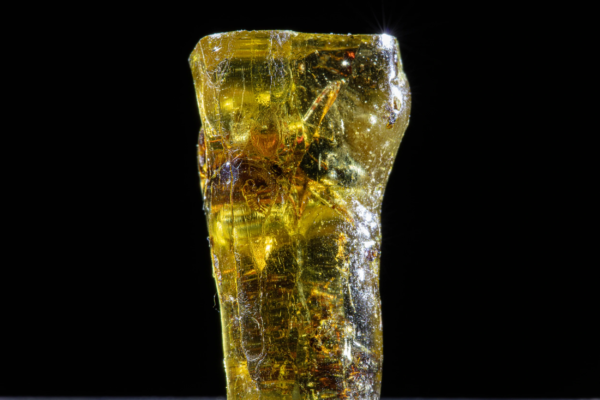
Amber is not a stone at all but the hardened, fossilized resin of ancient trees. Its name has a strange history. It comes from the Arabic word anbar. That word first meant ambergris, a waxy substance from whales used in perfume. In medieval trade the two got mixed up, and the name slid over to the golden resin we call amber today. The old Greek name tells a different story, one that gave the world the word electricity.
Through the Ages
Amber has been treasured for as long as people have gathered shiny things. Beads of it lie in graves thousands of years old. It traveled vast distances along ancient trade routes known together as the Amber Road. The Greeks gave it the name elektron and noticed something odd. Rub a piece of amber on cloth and it will pull bits of straw and dust toward it. The thinker Thales noted this around 600 BC. It is the first record of static electricity, and it is why we have the word electricity at all.
Today
Today amber is still loved for jewelry, warm and light and easy to wear. But it has also become a window into the deep past. Many pieces hold something amazing inside, an insect, a leaf, a feather, or a bubble of ancient air. Each was trapped when the resin was still sticky. Scientists study these tiny time capsules to learn what the world looked like millions of years ago. A single drop of tree sap can preserve a whole insect down to its finest hairs.
Geology & Occurrence
Formation
Amber begins as resin, the sticky sap that certain trees ooze to seal wounds and fend off insects. Now and then a blob of resin traps a bug or a leaf before it hardens. It is then buried under mud and sand and left for millions of years. Slowly the resin loses its lighter parts and turns into solid amber. Because it forms this way, amber is light, warm to the touch, and often a deep honey gold, quite unlike any rock or crystal. It can even float in salt water.
Notable Localities
The shores of the Baltic Sea hold the largest and most famous amber deposits. There the resin is around forty four million years old, and rich in the natural acid that gives true amber its name. The Dominican Republic is the other great source. It is prized for unusually clear amber full of well preserved insects, and for a rare kind that glows blue in sunlight. Smaller deposits are found wherever ancient resin rich forests once stood.
The idea of bringing dinosaurs back from amber made a famous movie, but the science does not hold up. Amber preserves the outer shape of trapped insects in amazing detail, sometimes down to a single hair. What it does not preserve is usable DNA, which breaks down far too quickly to survive for millions of years. Still, the dream is easy to understand. To hold a perfect ancient insect frozen in golden glass is to look straight into a vanished world.
One of the rarest forms of amber comes from the Dominican Republic and seems to break the rules. In ordinary light it looks like normal honey colored amber. But turn it toward the sun and it glows an eerie blue. The effect comes from the way the amber handles light, not from any dye or trick. Blue amber is found in only a few places on Earth, which makes a fine Dominican piece a real prize.