Identity
Technical notes (click to open)(click to close)
Name & Human History
Etymology
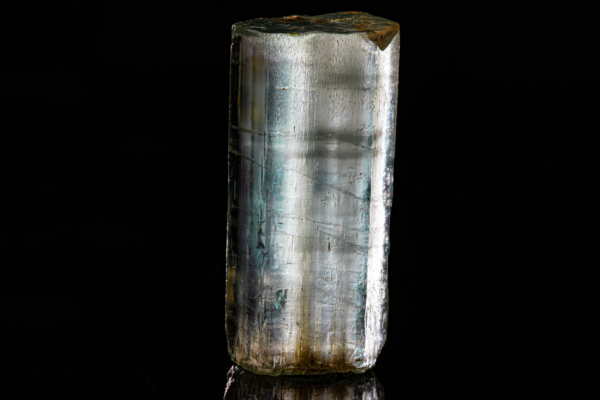
Aquamarine wears its meaning in its name. It comes from the Latin words for sea water, a perfect match for its cool blue to blue green color. It is a variety of beryl, the same mineral family that gives us emerald. Where emerald is green from traces of chromium, aquamarine is blue from traces of iron. The two are sisters in different dresses.
Through the Ages
For centuries, sailors carried aquamarine as a charm for safe passage. They believed the sea blue stone could calm rough water and guard against drowning. The ancient Greeks engraved it, and later cultures cut it into seals and ornaments. Its link to the sea has followed it through every age, which feels right for a gem the color of clear ocean.
Today
Today aquamarine is one of the most loved blue gems. It is hard, clear, and usually free of the flaws that mark its cousin emerald, so it cuts into clean, bright stones. Most aquamarine on the market is gently heated. Many stones come out of the ground a bit greenish, and warming removes the yellow tint to leave a purer blue. It is the birthstone for March.
Geology & Occurrence
Formation
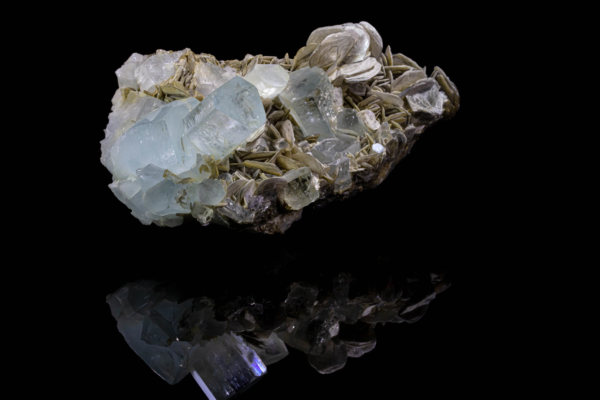
Aquamarine grows in pegmatites, coarse veins of rock where slow cooling lets crystals reach a large size. Some aquamarine crystals are enormous, clear six sided columns weighing many pounds. Its blue comes from iron sitting inside the beryl structure. The exact shade depends on how that iron is arranged, which is why heating can shift a stone from green blue toward pure blue.
Notable Localities
Brazil is the great source of aquamarine, famous for deep blue stones from mines like Santa Maria. Fine crystals also come from Pakistan, Madagascar, and several parts of Africa. In the United States, collectors climb to the top of Mount Antero in Colorado, more than two miles up, to dig aquamarine from pockets in the high granite.
The blue of aquamarine is a quiet kind of chemistry. Iron in two slightly different forms can sit inside the crystal. One form leans blue, the other leans yellow, and together they often make a sea green. Gentle heat coaxes the yellow form to change, and the green fades toward a clean blue. The change is stable and impossible to detect later, so most blue aquamarine you see began life a little greener.