Identity
Technical notes (click to open)(click to close)
Name & Human History
Etymology
Barite is the heavyweight of common minerals, and its name says so. It comes from the Greek word barys, meaning heavy. Pick up a piece and you feel it at once. For a pale, glassy mineral, it is surprisingly dense, far heavier than it looks. That weight is its signature, and it earned barite the old nickname heavy spar.
Today
That same heaviness makes barite quietly useful. Its biggest job is hidden underground, in the drilling of oil and gas wells. Ground into a powder and mixed into drilling fluid, barite weighs the mud down and helps hold back the pressure deep in a well. It is also swallowed as a harmless white liquid before certain medical scans, because it blocks X-rays and outlines the body from the inside.
Geology & Occurrence
Formation
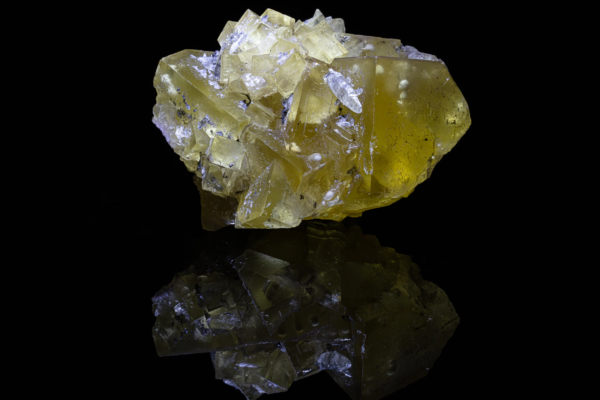
Barite forms in many settings, most often in veins alongside ores of lead and zinc. It also builds up in layers in sea floor sediment, and it grows in deserts in a remarkable way. There, crystals trap grains of sand as they form, fanning out into clusters that look just like the petals of a rose. These barite roses are prized by collectors.
Notable Localities
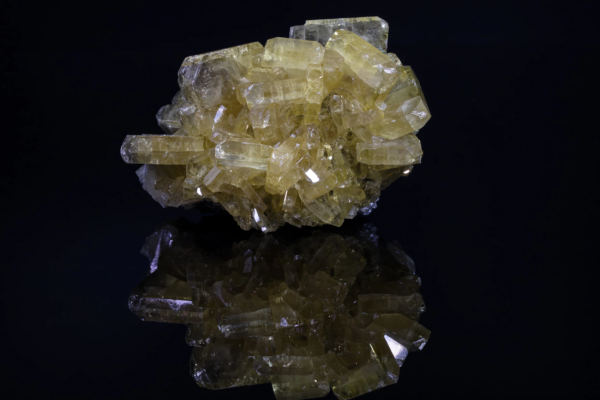
Barite is found all over the world. China is the largest producer today, mining vast amounts for industry. Fine crystals for collectors come from England, Morocco, Romania, and many parts of the United States, where South Dakota is known for golden specimens. The desert roses come mostly from Oklahoma.
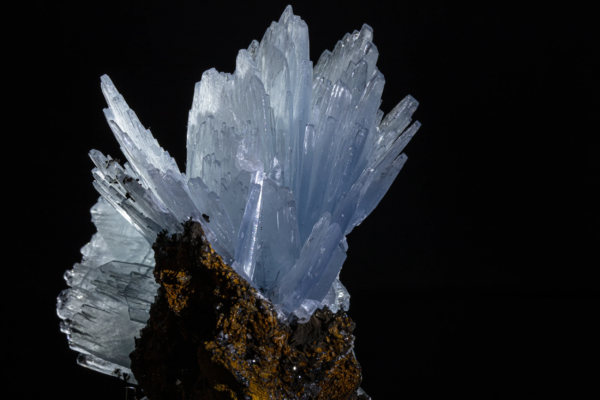
Barite can play a quiet trick on the eye. Some of its crystals are a clear, soft blue, much like the gem aquamarine. But the disguise does not last. Barite is far softer than aquamarine and noticeably heavier in the hand. Once you feel that surprising weight, there is no mistaking it. The heaviness that named the mineral is also the surest way to know it.