Identity
Technical notes (click to open)(click to close)
Name & Human History
Etymology
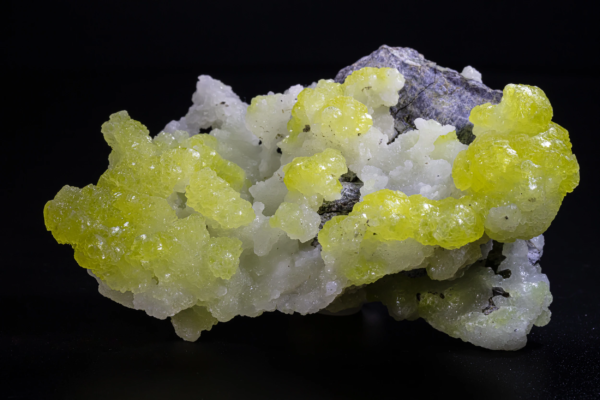
Brucite is a soft, pale mineral that most people have met without knowing it. It is magnesium hydroxide, the very same compound sold in drugstores as milk of magnesia. The mineral was named in 1824 for Archibald Bruce, an early American mineralogist and doctor who first described it. So the stone you might dig from a quarry shares its chemistry with the bottle in the medicine cabinet.
Today
Brucite is valued more for what it does than for how it looks. It is an important source of magnesium, a light metal used in everything from aircraft parts to antacids. It is also a fine fire retardant. When heated, brucite breaks down and releases water, which helps smother flames, so it is added to plastics and cables to make them safer. Collectors enjoy its soft, pearly crystals in white, pale green, and blue.
Geology & Occurrence
Formation
Brucite forms when other magnesium minerals are reworked by heat and water. It often grows in marble, where it replaces an earlier mineral called periclase. It also appears when certain deep rocks are altered by water, the same slow process that makes the green rock serpentine. It usually shows up as platy or fibrous masses rather than sharp crystals.
Notable Localities
Fine brucite comes from a scattering of places. The old chrome mine in Wood's, Pennsylvania, has long produced clear, glassy crystals. The Ural Mountains of Russia and the Val Malenco region of Italy are known for good specimens. Brucite also turns up in the asbestos mines of Quebec and at several sites in South Africa, often in lovely shades of green and blue.
Brucite gives a clue to its softness right away. Its crystals split into thin, pearly sheets, much like mica or talc. But where mica springs back, brucite folds and stays bent, and it is soft enough to mark with a fingernail. These gentle qualities, the pearly shine and the bending sheets, set it apart from the harder pale minerals it can resemble.