Identity
Technical notes (click to open)(click to close)
Name & Human History
Etymology
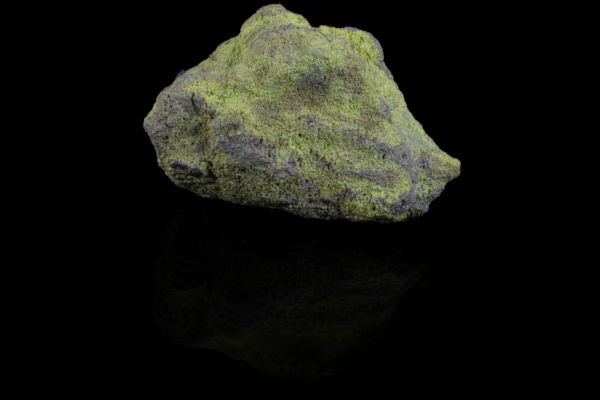
Carnotite is a soft, bright yellow mineral with a heavy secret. It is radioactive. The mineral is rich in uranium, and it also holds vanadium, which gives it that strong canary color. French scientists described it in 1899. They named it for Marie-Adolphe Carnot, a French mining engineer of the time. They studied the first samples from the sandstones of the American West, where carnotite stains the rock a vivid yellow.
Through the Ages
For a brief, intense moment in history, carnotite was one of the most wanted minerals on Earth. Around 1900, scientists learned that uranium ores held tiny amounts of radium. Radium was a rare and powerful element. Doctors found it could attack cancer, and demand soared. Prospectors rushed to the yellow sandstones of Colorado and Utah. For a time those deposits supplied most of the world's radium. Marie Curie herself worked with ore from this region.
Today
Today carnotite is valued as an ore of uranium and vanadium. These are the metals at the heart of nuclear power and tough steel. Because it is radioactive, it calls for respect. Collectors keep specimens in a sealed case, away from where people sleep and work. They never grind it or breathe its dust. Handled with care, it is a striking piece of the atomic age.
Geology & Occurrence
Formation
Carnotite forms near the surface, long after the rock around it. It appears when water carrying uranium and vanadium seeps through sandstone and settles in the pores. It often gathers around buried plant matter. So carnotite is frequently found coating ancient logs that turned to stone. These old riverbeds, now solid rock, trapped the metals that carnotite is made from.
Notable Localities
The richest carnotite deposits lie in the western United States. They run through the high desert of the Colorado Plateau, across Utah, Colorado, Arizona, and New Mexico. Crystals are rare for this usually powdery mineral, but fine ones come from mines in Katanga, in the Congo. Other deposits are scattered around the world, but the American West remains its true home.
Carnotite often forms in the shape of ancient life. It gathers in old buried riverbeds, where it soaks into logs and plants that had already turned to stone. Miners have pulled out petrified tree trunks stained bright yellow from end to end with carnotite. The uranium that powers a reactor today was laid down, drop by drop, in a forest that fell millions of years ago.