Identity
Technical notes (click to open)(click to close)
Name & Human History
Etymology
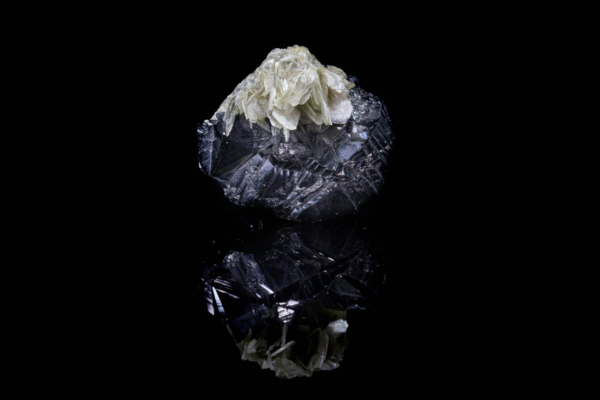
Cassiterite is the world's main source of tin, and it has been for thousands of years. Its name comes from the Greek word for tin, kassiteros. The mineral is a tin oxide, usually dark brown to black, with a bright shine and a surprising weight. It is so dense that a small piece feels far heavier than it looks, a clue that helped old miners spot it in stream gravels.
Through the Ages
Few minerals have shaped human history like cassiterite. Long ago, people learned that adding tin to copper makes bronze, a metal far harder and more useful than either alone. That discovery launched the Bronze Age. The tin almost always came from cassiterite, and the search for it drove ancient trade across whole continents. The tin mines of Cornwall, in England, were famous in the ancient world.
Today
Today cassiterite is still the ore behind nearly all of our tin. Tin coats the inside of food cans to stop rust, joins electronics together as solder, and mixes into many useful alloys. Most tin is now dug from loose deposits in places like Malaysia and Indonesia, where the heavy grains have washed into riverbeds and settled. Fine crystals are also prized by collectors.
Geology & Occurrence
Formation
Cassiterite forms in and around granite, in hot veins and coarse pegmatite pockets. Because it is hard and resists weathering, it survives long after its parent rock crumbles. The freed grains wash downstream and gather in river gravels, where they can be scooped up and panned much like gold. This is how much of the world's tin is still won today.
Notable Localities
Cornwall in England is the classic old source, mined since ancient times. Bolivia is famous for sharp, lustrous crystals from its mountain mines. The largest tin production today comes from the river deposits of Malaysia, Indonesia, and nearby lands. Collectors especially prize the bent elbow twins, two crystals joined at an angle like a knee.
Cassiterite helped end the Stone Age. Bronze, the metal that gave the Bronze Age its name, is mostly copper with a little tin, and that tin came from cassiterite. Copper is soft, but a touch of tin makes it hard enough for real tools and weapons. The hunt for cassiterite sent traders across seas and deserts thousands of years ago, making this heavy brown stone one of the most sought after materials of the ancient world.