Identity
Technical notes (click to open)(click to close)
Name & Human History
Etymology
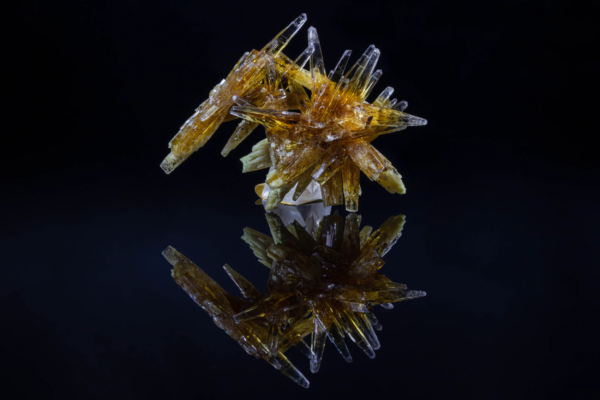
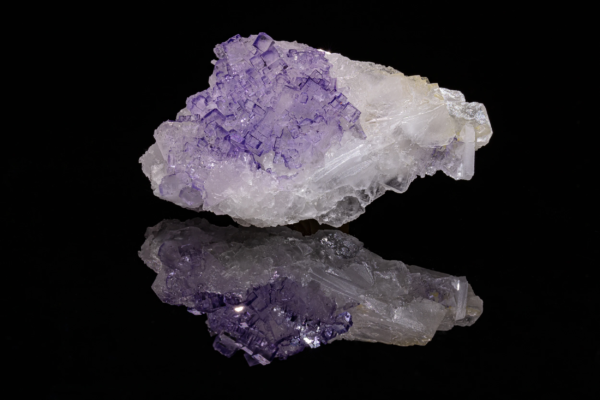
Celestine is a pale, sky blue mineral, and its name reaches for the heavens. It comes from a Latin word meaning celestial, given for the soft blue color of the first specimens. Not all celestine is blue. It also comes in white, yellow, and orange. But the gentle sky blue is its signature. The mineral is strontium sulfate, the main natural source of the element strontium.
Today
Celestine is best known as the ore of strontium, an element with a flashy job. Strontium is what paints fireworks and warning flares a deep, brilliant red. There is no better way to make that color. So for a long time celestine was mined heavily to feed the fireworks and flare trade. It was also once used in the glass of old television screens. Collectors, meanwhile, prize it for its clean blue crystals.
Geology & Occurrence
Formation
Celestine forms in sedimentary rock, often where ancient seas left their minerals behind. It frequently grows inside hollow rocks called geodes, lining them with clusters of glassy blue crystals. It also appears in beds of limestone and in cavities, sometimes alongside sulfur. The blue color tends to fade a little with long exposure to strong light.
Notable Localities
Madagascar is famous for its geodes lined with gemmy, sky blue celestine, the finest known. In the United States, an island in Lake Erie holds an astonishing sight. A cave there is a single giant geode, lined with celestine crystals as big as a person. Sicily produces pale celestine that grows beside bright yellow sulfur.
The world's largest known geode is made of celestine. It sits beneath a small island in Lake Erie, in Ohio, and visitors can walk right inside it. The hollow is about ten meters across. Its walls bristle with pale blue celestine crystals up to nearly half a meter long. Once a working mine for strontium, it is now a quiet underground wonder.