Identity
Technical notes (click to open)(click to close)
Name & Human History
Etymology
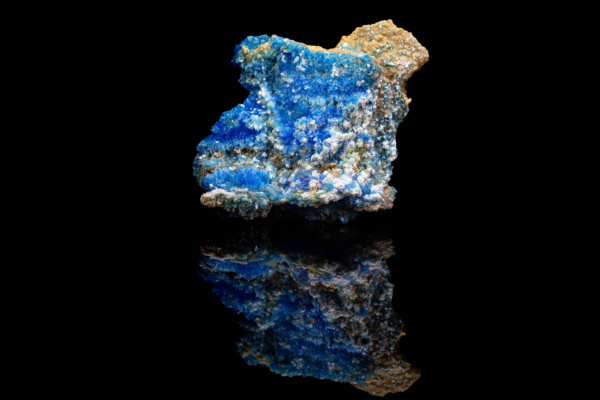
Chalcanthite is a mineral of pure, intense blue, and it comes with a warning. It is copper sulfate, and it dissolves in water as easily as sugar. Its name comes from two Greek words meaning copper flower. The blue is gorgeous, but the mineral is fragile in a way few others are. A splash of water can ruin a specimen, and dry air alone can make it crumble to pale powder over time.
Today
Because of that delicate nature, chalcanthite asks for special care. It must be kept dry and never washed, since water will dissolve it. It is also toxic, so it is handled carefully and kept away from food and from children. There is one more catch a collector should know. Most of the bright blue chalcanthite sold today is not natural at all but grown in a lab from copper sulfate solution.
Geology & Occurrence
Formation
Chalcanthite forms where copper ore meets air and water in very dry places. As copper rich water trickles through a mine or a desert deposit, it can dry and leave behind blue chalcanthite on the rock. It often appears on the walls of copper mines, crusting over after the rock is exposed. Because it dissolves so readily, it survives in nature only where rain is rare.
Notable Localities
Natural chalcanthite is uncommon and usually comes from the dry copper districts of the world, such as the deserts of Chile and parts of the American Southwest. Truly natural crystals are scarce, since most dissolve away long before anyone finds them. This rarity is exactly why so much of what is sold is the easy to grow synthetic kind.
A genuine chalcanthite is harder to find than it looks. The lab grown crystals are often huge, flawless, and a uniform deep blue, which is the giveaway. Real natural ones tend to be smaller and less perfect, and they usually sit on a piece of host rock. If a big blue crystal looks too clean and perfect to be true, it most likely grew in a beaker, not in the earth.