Identity
Technical notes (click to open)(click to close)
Name & Human History
Etymology
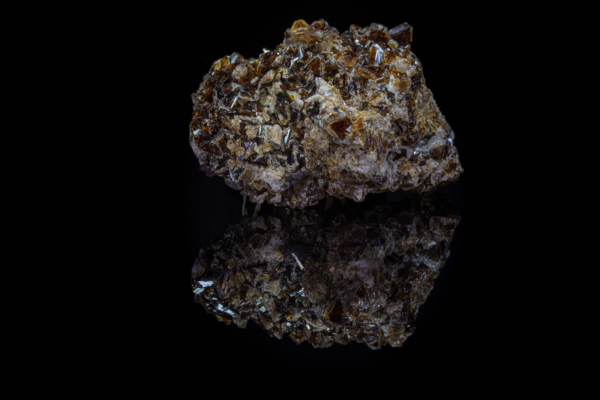
Colemanite is a clear to white mineral with a starring role in a great tale of the American West. It is a calcium borate, a leading natural source of boron. It was named in 1883 for William Tell Coleman, a businessman who built the borax industry of California. The first specimens came from the floor of Death Valley, where colemanite formed in an ancient dried up lake.
Through the Ages
Colemanite was once the world's main source of borax and boron. It held that crown until the 1930s. Boron is a quietly useful element. It goes into heat resistant glass like the kind in oven dishes, into ceramic glazes, into detergents, and into fiberglass. So while colemanite is not a household name, the boron it gave us has touched countless everyday things.
Geology & Occurrence
Formation
Colemanite forms in the beds of ancient desert lakes. Where a salty lake dried up long ago, boron rich water left behind a series of minerals, and colemanite grew among them. It often forms by the slow reworking of earlier, simpler borate minerals. Its crystals are clear and brilliant, and they fill cavities in the old lake beds, sometimes in fine large groups.
Notable Localities
The classic colemanite comes from Death Valley and the Mojave Desert of California, especially the area around the town of Boron. Today the largest deposits are mined in Turkey, now the world's leading source of boron. Argentina also yields good specimens from its high desert salt flats.
The Death Valley colemanite mines gave America one of its most famous images, the twenty mule team. The desert was so remote that teams of twenty mules hauled giant wagons of borax across 165 miles of blistering desert to the nearest railroad. Between 1883 and 1889 these teams carried out thousands of tons without losing a single mule. The twenty mule team later became a famous brand of borax soap.