Identity
Technical notes (click to open)(click to close)
Name & Human History
Etymology
Copper is one of the oldest friends of the human race. It is one of the very few metals that nature offers in pure, ready to use form, as native copper. Its name traces back to the island of Cyprus, a great source of copper in the ancient Mediterranean. The Romans called it the metal of Cyprus, which in Latin became cuprum, the root of both the word copper and its chemical symbol.
Through the Ages
Copper changed the course of history. It was one of the first metals people ever worked, soft enough to hammer into tools and ornaments without any furnace. Later, smiths learned that mixing copper with a little tin made bronze, a far harder metal, and the Bronze Age was born. Today copper still runs the modern world, carrying electricity through the wires in nearly every building and device.
Geology & Occurrence
Formation
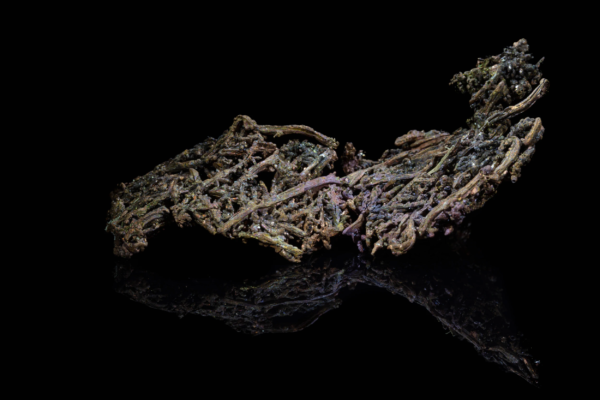
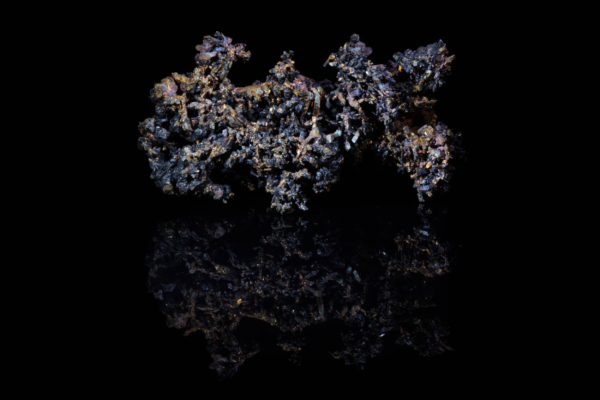
Native copper forms where copper rich fluids meet the right conditions underground, often in old lava flows and in the weathered tops of copper deposits. It can grow in beautiful branching, tree like shapes, or as twisted wires and thin sheets. Fresh copper has a bright reddish shine, but in air it slowly tarnishes to brown, then to the familiar green of an old roof or statue.
Notable Localities
The greatest native copper deposits on Earth lie in the Keweenaw Peninsula of Michigan, on the shore of Lake Superior. Native peoples mined copper there for thousands of years. The largest single mass ever found weighed about 420 tons. Fine copper crystals also come from Arizona, from Bolivia, and from the old mines of Cornwall in England.
One reason copper has served humans for so long is that you can simply find it. Most metals are locked inside ores and must be smelted out with heat. But native copper sits in the ground as the pure metal, soft and bendable. An early human could pick up a lump and hammer it into a knife or a bead with nothing but a stone. That head start helped copper lift humanity out of the Stone Age.