Identity
Technical notes (click to open)(click to close)
Name & Human History
Etymology
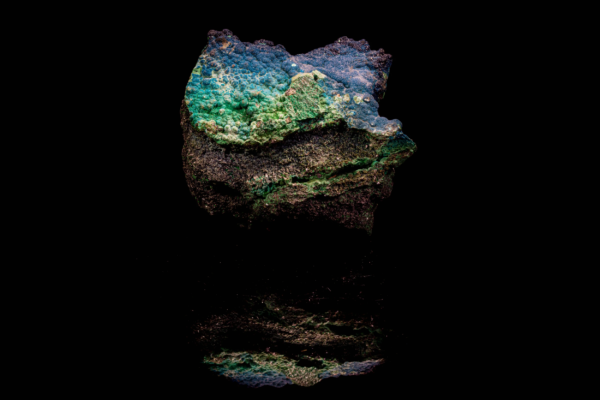
Cornetite is a rare copper mineral of a deep, glowing blue. It is a copper phosphate. It forms only in small amounts in the weathered tops of copper deposits. It holds a special place in history as the first new mineral ever discovered in the Congo. It was named for Jules Cornet, a Belgian geologist who explored the region and revealed its huge mineral riches.
Today
Cornetite is purely a collector's mineral. It is far too rare to be of any use as an ore. But its rich blue color and sparkling little crystals make it a prize for those who seek out the unusual. Good specimens show tiny, deep blue prisms gathered into crusts and rosettes, often perched on rock beside green copper minerals.
Geology & Occurrence
Formation
Cornetite forms near the surface, where copper ore breaks down in a dry climate. Copper and phosphorus combine in the weathered zone to make this deep blue mineral. It is a fragile thing in geologic terms, since over time it tends to change into other copper minerals. It keeps company with malachite, chrysocolla, and other minerals of the oxidized zone.
Notable Localities
The finest cornetite in the world comes from its birthplace, the Star of the Congo mine near Lubumbashi. This rich copper district in the Katanga region of the Congo is its classic home. Smaller amounts have since been found in Zambia, Chile, the United States, and a few other copper regions.
Cornetite carries the memory of how the Congo's mineral wealth came to light. Jules Cornet was the geologist who first mapped the huge copper riches of Katanga in the 1890s. When a brand new blue mineral was found in those deposits, it was named in his honor. As the first new mineral ever described from the Congo, it marks the start of a famous run of discoveries from that ground.