Identity
Technical notes (click to open)(click to close)
Name & Human History
Etymology
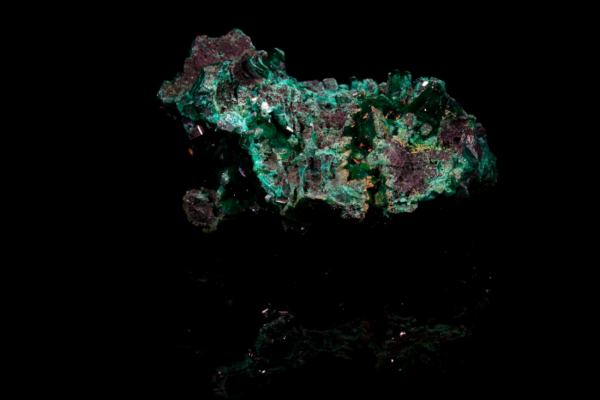
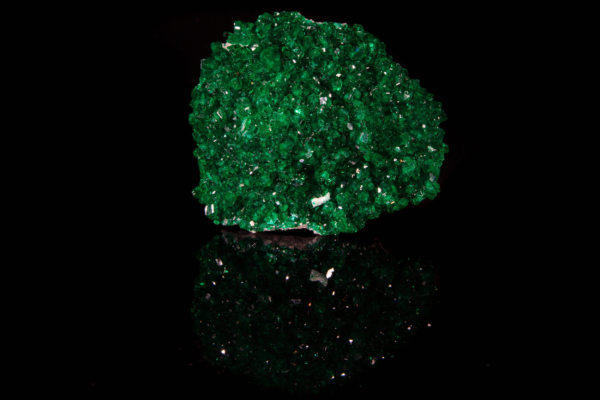
Dioptase is a rare copper mineral of an almost unreal emerald green. Its color is so rich it has fooled experts. The name comes from two Greek words meaning to see through, because you can look into a clear crystal and see the planes where it would split. A French scientist named it in 1797. The intense green comes from copper, the same metal that turns old roofs green.
Today
Dioptase is a pure collector's treasure. Its green rivals the finest emerald, but it can never be worn. The crystals split far too easily along their internal planes, so cutting one into a gem almost always shatters it. Instead, collectors prize dioptase just as it grows, as clusters of glittering green crystals on rock. A fine piece is one of the most vividly colored minerals there is.
Geology & Occurrence
Formation
Dioptase forms near the surface, where copper deposits slowly weather. This is unusual, because the silica it needs does not normally travel well in water. But in dry, alkaline ground, with limestone nearby to soften the acids, silica can dissolve and join with copper to build dioptase. It grows as small, sparkling green crystals lining cavities in the weathered rock.
Notable Localities
The most spectacular dioptase in the world comes from the Tsumeb mine in Namibia, famous for its perfect crystals. The original dioptase was found long ago in Kazakhstan, which is still a classic source. Fine green crystals also come from the copper deposits of the Congo and from a few mines in Arizona, but dioptase remains a rare find everywhere.
The first dioptase caused a stir, because it was mistaken for emerald. Found by copper miners in Kazakhstan, its deep green looked like a vast new emerald strike. But a simple test gave it away. Emerald is one of the hardest gems, while dioptase is fairly soft and easily scratched. The dream of an emerald mountain faded, but a beautiful new mineral had been found in its place.