Identity
Technical notes (click to open)(click to close)
Name & Human History
Etymology
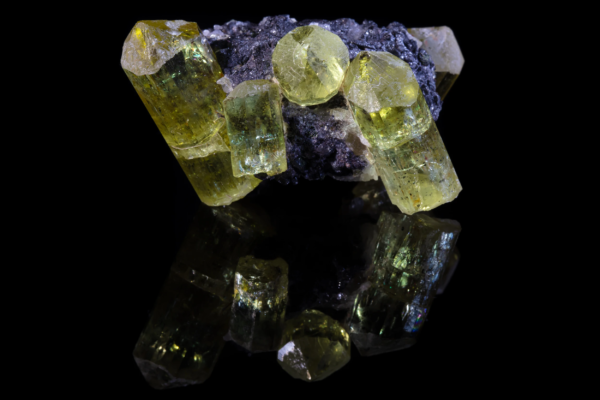
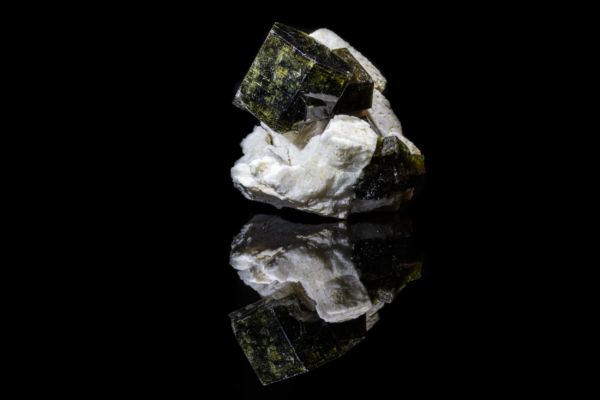
Fluorapatite is the most common member of the apatite family, a group of phosphate minerals. The apatite name comes from a Greek word meaning to deceive. It was given because apatite is so often mistaken for other minerals. It comes in many colors and shapes. Fluorapatite is the form that holds fluorine, and it is by far the most widespread. It usually grows as green, blue, or brown six sided crystals.
Today
Fluorapatite is hugely important, though it rarely makes the news. Vast beds of it, mined as phosphate rock, are the main source of phosphorus for the world's fertilizers. Without it, modern farming could not feed the planet. Clear, well colored crystals are also cut as collector gems. They are soft, though, and best kept for display rather than daily wear.
Geology & Occurrence
Formation
Fluorapatite forms in many settings. It crystallizes from cooling magma in igneous rocks. It grows in veins from hot fluids. And it builds up in great sedimentary beds on ancient sea floors. Those sea floor beds, made of countless tiny phosphate grains, are the ones mined for fertilizer. Fine crystals come instead from veins and pockets in harder rock.
Notable Localities
Fine fluorapatite crystals come from many places. Deep green ones come from the Pyrenees, purple ones from Maine and Germany, and fine blue ones from Brazil. Mexico produces clear yellow gems, and Portugal and Canada yield large crystals. The huge phosphate beds mined for fertilizer lie in Morocco, Florida, and Russia.
Fluorapatite is closer to you than any specimen on a shelf. The hard enamel of your teeth is built from a cousin mineral, hydroxylapatite. When fluoride from toothpaste or water meets your enamel, it slowly turns the surface toward fluorapatite, which resists acid better. That tiny change is why fluoride helps fight cavities. The same mineral that feeds the world's crops also helps guard your smile.