Identity
Technical notes (click to open)(click to close)
Name & Human History
Etymology
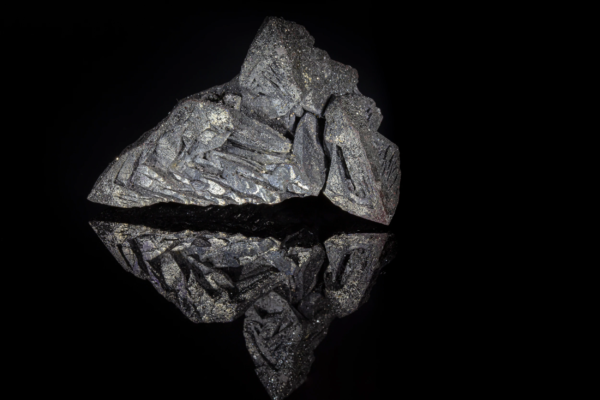
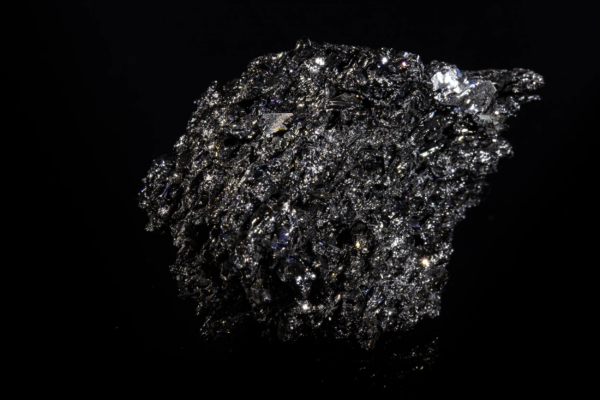
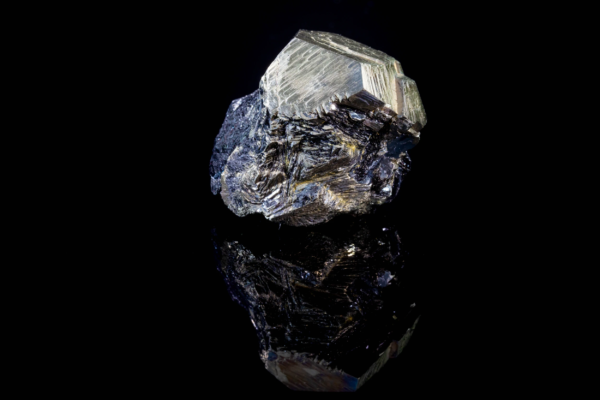
Hematite is the most important ore of iron, and it has a secret hidden in its name. The word comes from the Greek for blood. Whatever color the solid crystal is, even shiny silver or black, hematite always leaves a deep red mark when scraped, and powdered hematite is rust red. That red is iron oxide, the same stuff as common rust, and it has colored human life for ages.
Through the Ages
Hematite is mined by the millions of tons as the world's main source of iron. But it has a softer side too. Polished metallic hematite has long been used in jewelry for its mirror like, gunmetal shine. Ground to a powder, it becomes red ochre, one of the oldest pigments of all, used in art and burial for tens of thousands of years. Collectors prize its many forms.
Geology & Occurrence
Formation
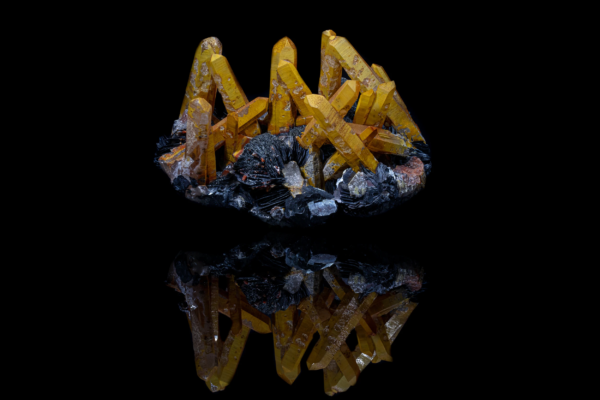
Hematite forms in several ways. Vast ancient beds, called banded iron formations, settled out of early seas and hold most of the world's iron. Hematite also forms when other iron minerals weather, and it grows from hot fluids in veins. In these veins it can build beautiful crystals, from mirror bright plates to rounded, kidney shaped masses.
Notable Localities
Hematite comes in striking forms from classic places. The smooth, rounded kidney ore comes from Cumbria in England. Thin, bright, rosette like clusters, called iron roses, come from the Alps of Switzerland. Huge ore bodies are mined in Brazil, Australia, and the Lake Superior region of the United States. Fine mirror bright crystals come from Italy and Brazil.
Hematite even explains a sight in the night sky. Mars glows red to the eye, and that famous color comes from iron oxide dust, the same red that hematite leaves on white tile. The planet is, in a sense, gently rusting. Closer to home, the red streak is the surest test for hematite. No matter how silver or black the crystal looks, that blood red mark gives it away every time.