Identity
Technical notes (click to open)(click to close)
Name & Human History
Etymology
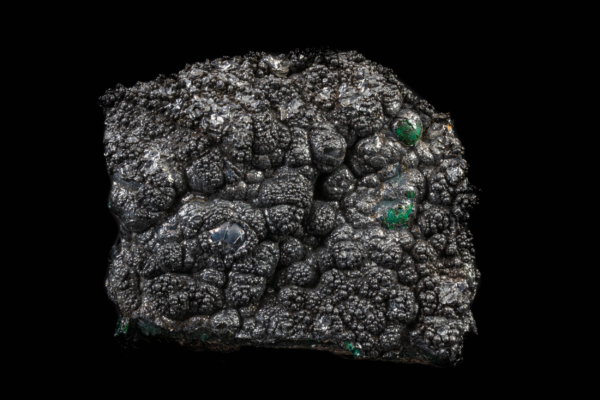
Heterogenite is a black cobalt mineral, and it is the great cobalt ore of central Africa. It is made of cobalt, oxygen, and hydrogen. It is one of the richest cobalt minerals there is. The name comes from a Greek word meaning of another kind. Heterogenite is rarely showy. It usually forms black, dull, kidney shaped crusts or soft, sooty masses rather than sparkling crystals.
Today
Heterogenite may look plain, but it matters greatly in the modern world. Cobalt is a key metal in the rechargeable batteries that run phones, laptops, and electric cars. A large share of the world's cobalt comes from heterogenite, mined in one part of Africa. That makes this humble black crust a quiet cornerstone of today's technology.
Geology & Occurrence
Formation
Heterogenite forms at the surface, where cobalt bearing rocks slowly weather. Older cobalt and copper minerals break down in air and water. The cobalt is freed, and then it settles again near the surface as heterogenite. This builds a dark, cobalt rich cap over the deposit below. It often grows as rounded, bubbly crusts staining the rock.
Notable Localities
Heterogenite is found above all in one place. The Copperbelt of the Democratic Republic of the Congo holds most of the world's supply. It lies in a rich belt of copper and cobalt ores. Far smaller amounts turn up in Morocco, Australia, and a few other spots. But for science and industry alike, the Congo deposits stand in a class of their own.
Heterogenite tells a story that links two specimens. It often forms from the weathering of carrollite, a copper cobalt sulfide. That mineral comes from the very same Congo deposits. As carrollite breaks down near the surface, its cobalt is set free and rebuilt into heterogenite. So a black crust of heterogenite and a bright carrollite crystal are two chapters in the life of one deposit.