Identity
Technical notes (click to open)(click to close)
Name & Human History
Etymology
Jagueite is one of the rarest minerals in this collection, a selenide of copper and palladium. Palladium is a precious metal, a cousin of platinum. Jagueite is one of the few minerals that holds it. The mineral was approved by science only recently, in the early 2000s. It is named after Jagué, the small Argentine village nearest the mine where it was found.
Today
Jagueite is a true rarity, of interest mainly to science and to collectors of the unusual. It is not a display crystal but a research mineral. It is known from almost nowhere on Earth. Its value lies in its rarity and its strange chemistry, the marriage of copper with a precious metal, rather than in any beauty the eye can catch.
Geology & Occurrence
Formation
Jagueite forms in a special kind of vein. These veins are filled not with the usual sulfur minerals but with their selenium cousins, the selenides. Warm fluids laid them down late in a deposit's life. Jagueite grows there in tiny grains, locked among a suite of rare copper, silver, and mercury selenides.
Notable Localities
Jagueite is known from essentially one place. This is the El Chire prospect in the La Rioja Province of Argentina. The remote spot, high in the dry hills, is a notable selenide locality. A few other veins in the same region carry related minerals. But jagueite itself remains tied to its birthplace.
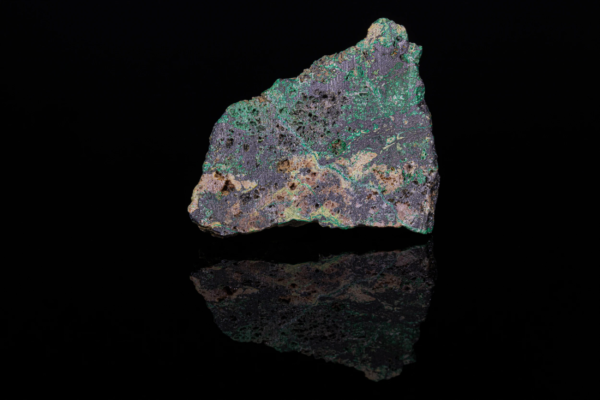
Jagueite is so small that you cannot really see it. It forms grains no bigger than a fraction of a millimeter, with no crystal shape. They are woven into a silvery mineral called chrisstanleyite. The two are nearly identical, and only a laboratory probe can tell them apart. So a jagueite specimen is really a label of trust, backed by science rather than by the naked eye.