Identity
Technical notes (click to open)(click to close)
Name & Human History
Etymology
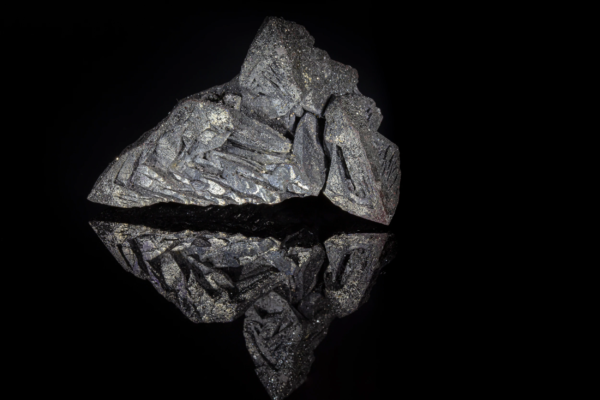
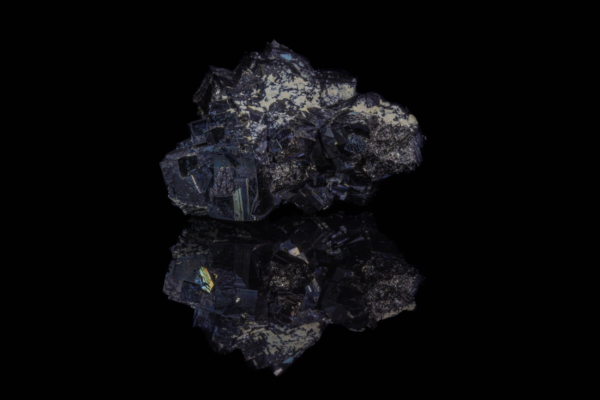
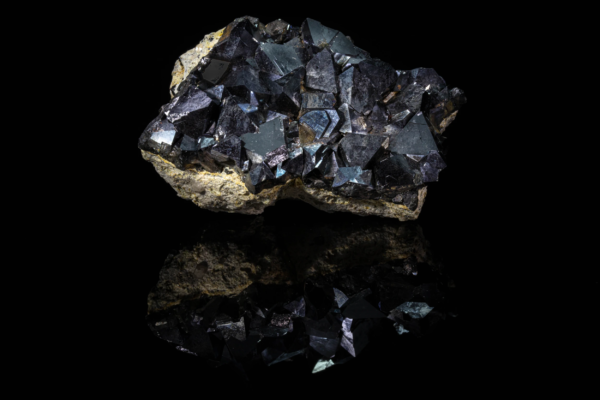
Magnetite is a black iron oxide, and it is the most magnetic of all natural minerals. It can be drawn to a magnet, and some pieces are magnets themselves. It usually grows as black, eight sided crystals or as heavy black masses, and it leaves a black mark when scraped. It is one of the chief ores of iron, mined by the millions of tons.
Through the Ages
Magnetite gave humankind its first taste of magnetism. Some naturally magnetic pieces, called lodestone, will pick up small bits of iron all on their own. Ancient peoples noticed this strange power long ago. In time, a sliver of lodestone hung on a thread was found to swing toward north, and the magnetic compass was born, a tool that opened the world to explorers.
Today
Magnetite is above all a great iron ore. Its rich iron content and easy magnetic separation make it valuable to industry. For collectors, sharp black octahedral crystals are the prize. It also matters in nature beyond mining, since tiny grains of magnetite in rocks record the direction of the Earth's magnetic field at the time they formed.
Geology & Occurrence
Formation
Magnetite forms in many settings. It crystallizes from cooling magma as a common accessory in igneous rocks, and it gathers in great beds called banded iron formations laid down in ancient seas. It also grows in metamorphic rocks and in some veins. Tiny grains of it are scattered through a huge range of rocks worldwide.
Notable Localities
Magnetite comes from many places. Huge ore bodies are mined in Sweden, at Kiruna, and across Scandinavia. Sharp, lustrous crystals come from the Alps, from Russia, and from Bolivia. Beds of magnetite rich rock are worked in the United States, Australia, and Brazil. Few iron minerals are so widespread.
The compass may be the most world changing gift of any mineral. It all began with lodestone, naturally magnetized magnetite. A piece free to turn will line up north and south, pointing the way. For centuries sailors trusted this small magnetic stone to cross trackless oceans. A simple black rock, it quietly helped reshape the map of the world.