Identity
Technical notes (click to open)(click to close)
Name & Human History
Etymology
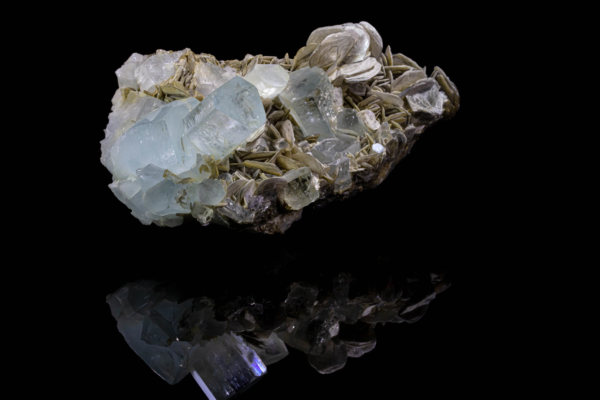
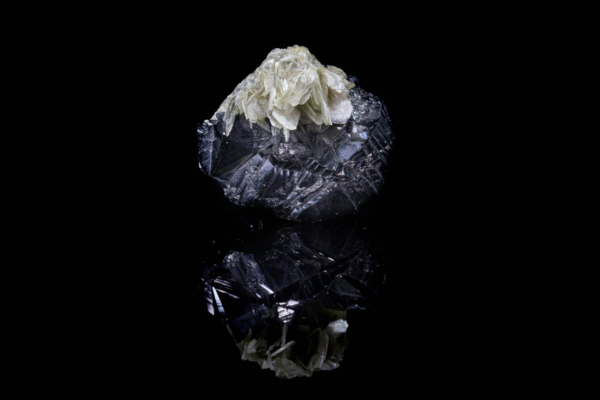
Muscovite is the common white mica, a mineral that splits into thin, clear, bendy sheets. It is a silicate of potassium and aluminum, built in layers stacked like the pages of a book. A knife can lift off sheet after sheet, each thin enough to see through, springy, and tough. Its color is usually silvery, pale brown, or green.
Today
Muscovite has long been useful as well as common. Because it splits into clear, heat proof sheets, it was once used as window glass, especially for stove and lantern doors. Today it insulates electrical parts, since it blocks both heat and electricity well. Ground to a fine powder, it adds shimmer to paints and cosmetics. Its sparkle is also what makes many rocks glitter.
Geology & Occurrence
Formation
Muscovite forms in many rocks. It is common in granite and in the coarse veins called pegmatites, where it can grow into enormous sheets. It also fills metamorphic rocks such as schist and gneiss, and because it resists weathering, its flakes survive in sands and sandstones long after softer minerals are gone.
Notable Localities
Muscovite is found worldwide, but some places are famous for it. Giant commercial sheets, some over a meter across, have come from the pegmatites of India and Brazil. Fine crystals also come from the United States, Russia, and many other countries. It is one of the most widespread minerals on Earth.
Muscovite got its odd name from old windows. Long ago in Russia, then known as Muscovy, thin sheets of this mica were used in place of glass, letting light into homes and palaces. Traders called the material Muscovy glass, and the name slowly shortened to muscovite. A green form colored by chromium, called fuchsite, adds a splash of color to the family.