Identity
Technical notes (click to open)(click to close)
Name & Human History
Etymology
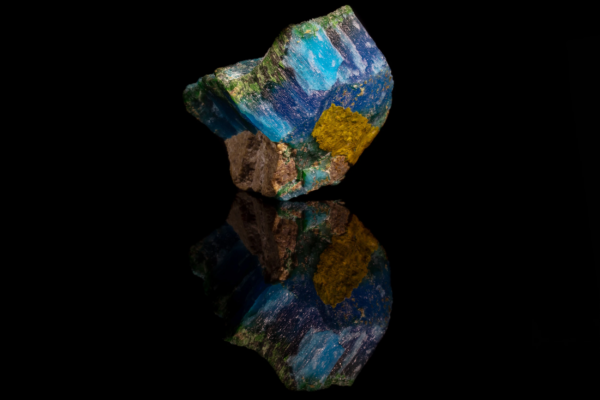
Natrochalcite is a rare green mineral, a sulfate of sodium and copper. Its name is a simple description, joining the old words for sodium and for copper. It grows as small, bright green, glassy crystals, often in crusts on rock. It comes from the great copper deposits of the Atacama desert in northern Chile, one of the driest places on Earth.
Today
Natrochalcite is a collector's rarity. It is known from only a few places in the world, so good crystals are scarce and sought after. Its clean green color and glassy crystals make it a prize for those who collect the unusual copper minerals of the desert. It is not an ore, just a mineralogical curiosity.
Geology & Occurrence
Formation
Natrochalcite forms at the surface, in the oxidized zone of copper deposits. It needs a very dry climate, which is why the rainless Atacama is its home. There, copper, sodium, and sulfate left behind by drying waters join to build the green crystals. It grows with other rare copper salts of the desert.
Notable Localities
Natrochalcite is found mainly in Chile, with only a few other reported sites. The Chuquicamata mine, one of the largest copper mines on Earth, is its classic home. There it was first described long ago, alongside other strange sulfates of the Atacama. Fine old Chilean crystals are the ones collectors seek.
Natrochalcite belongs to a small family of desert copper sulfates. It was first described in 1908, named in the same study as its relative kröhnkite, from the same Chilean copper field. Like many of these minerals, it dissolves a little in water, so a specimen must be kept dry. They are the strange children of a place where it almost never rains.