Identity
Technical notes (click to open)(click to close)
Name & Human History
Etymology
Pyrite gets its name from the Greek word pyr, which means fire. Strike a piece of pyrite against steel or flint and it throws off bright sparks. Long before matches existed, people used those sparks to start fires, so the Greeks called it the fire stone. The same trick later helped fire early guns, where a spinning steel wheel ground against a piece of pyrite to light the gunpowder.
Through the Ages
Because it shines with a brassy yellow color, pyrite has fooled people for as long as anyone has hunted for gold. That is how it earned its nickname, fool's gold. More than once in history, hopeful miners have hauled home a worthless load of it. In ancient Mesoamerica, the Maya and other peoples put its shine to better use, polishing flat pieces into mirrors. In the 1800s, jewelers cut and polished it into sparkling stones, which they sold under the name marcasite.
Today
Today pyrite is no longer needed for making fire, but it still has jobs to do. For a long time it was a main source of the sulfur used to make sulfuric acid, one of industry's most important chemicals. It is also a useful clue for gold miners, since real gold often forms in the same rocks and can even hide as tiny specks inside the pyrite itself. Beyond that, its sharp natural cubes make it a favorite among mineral collectors.
Geology & Occurrence
Formation
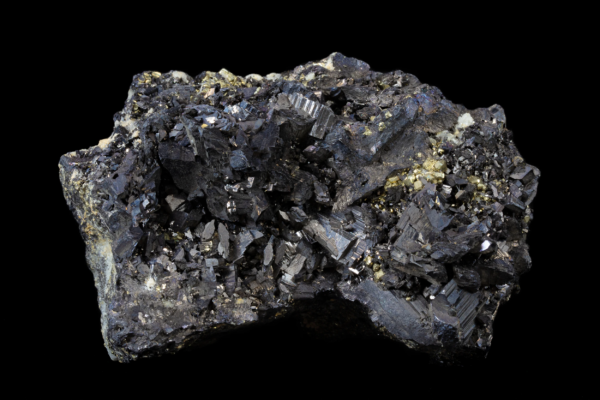
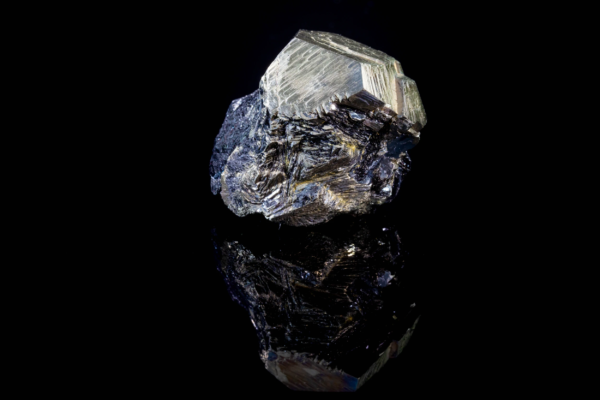
Pyrite is iron joined with sulfur, and it forms almost everywhere those two meet. It grows in hot mineral veins, in muddy seafloor sediment, in coal beds, and even inside fossils, where it can slowly replace shell or bone and turn them golden. One of its most striking traits is its shape. Pyrite often grows as near perfect cubes with fine grooves on their faces, or as twelve sided forms, looking so deliberate that many people assume they were carved by hand.
Notable Localities
Spain is famous for the sharp, mirror bright cubes from Navajun, often resting on plain gray rock. Peru produces large, complex clusters from its silver mines. In the United States, the coal fields of Illinois are known for flat, radiating disks called pyrite suns. Italy, and the island of Elba in particular, has long produced fine crystals as well.
Pyrite has tricked treasure hunters for centuries, which is how it earned the name fool's gold. During the great gold rushes, more than one hopeful miner staked everything on a glittering vein that turned out to be worthless. The test is quick. Real gold is soft and bends, while pyrite is brittle and cracks. Rub each one on a piece of rough white tile and gold leaves a yellow mark, but pyrite always leaves a dark greenish black one.
There is a twist to the fool's gold story. Pyrite and real gold often grow in the very same rocks, and scientists have found that gold can hide inside pyrite as specks far too small to see. So the stone that fooled so many prospectors sometimes carries a trace of the very thing they were chasing.