Identity
Technical notes (click to open)(click to close)
Name & Human History
Etymology
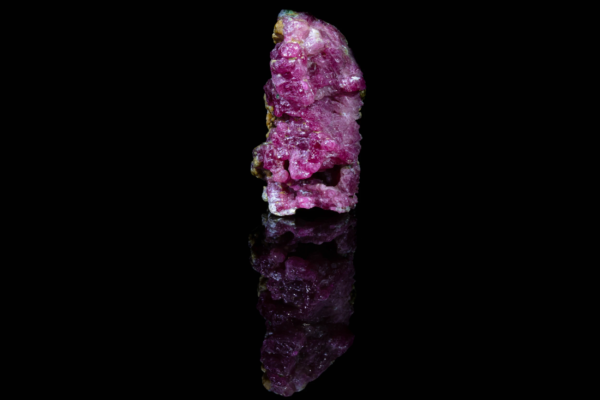
Ruby is the red variety of corundum, colored by chromium. The same element that makes emerald green turns corundum a deep, glowing red, and the more chromium it holds, the stronger the color. The finest ruby is a pure, faintly bluish red that the gem trade calls pigeon's blood. Its name comes from the Latin word for red. Everything about ruby is corundum, except this one thing: its color.
Today
Ruby is one of the four traditional precious stones, alongside diamond, sapphire, and emerald, and the finest untreated rubies sell for more per carat than almost any other gem. Their appeal joins a vivid red with the toughness of corundum, hard enough to wear every day for a lifetime. Most ruby on the market is heated to improve its color, so untreated stones of fine color are especially prized.
Geology & Occurrence
Formation
Ruby forms like all corundum, where aluminum is plentiful and silica is scarce, but it needs one more ingredient: chromium, to make the red. The classic rubies of Myanmar grew in marble, where limestone was cooked deep in the crust and chromium happened to be present. Because corundum is so tough, rubies often end up in river gravels, worn free of the rock that made them.
Notable Localities
Mogok in Myanmar has produced the world's finest rubies for centuries, the source of the legendary pigeon's blood color. Superb rubies also come from Mong Hsu in Myanmar, and Mozambique is now a leading producer of fine stones. Thailand, Sri Lanka, Madagascar, and Vietnam round out the great ruby sources.
The world's first laser was built from ruby. In 1960 the American physicist Theodore Maiman took a small rod of synthetic ruby, wrapped it in a bright flashing lamp, and coaxed its chromium atoms to release a single pure beam of red light. Every laser that followed traces back to that ruby rod, from the scanner at a checkout to surgery on an eye, all descended from the red gem's chromium.