Identity
Technical notes (click to open)(click to close)
Name & Human History
Etymology
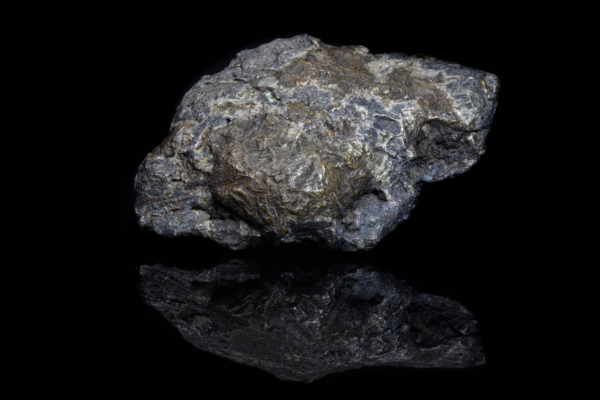
Native silver is the metal silver found in nature in its pure form, not combined with other elements. It is soft, heavy, and silver white when fresh. But it tarnishes gray and then black. Good crystals are uncommon. It more often forms wires, branches, sheets, and masses. The name comes from an old English word for the metal, related to German silber. Its chemical symbol, Ag, comes from argentum, the Latin word for silver.
Through the Ages
People have worked silver since the 4th millennium BCE, in Anatolia and around the Aegean Sea. In ancient Egypt it was valued above gold for much of the country's history. Native peoples in Mesoamerica and the Andes hammered native silver into thin sheets. Later, silver from Spanish colonial mines was minted as the Spanish dollar, which became the first world currency. A mercury method called the patio process was developed at Pachuca in Mexico in 1554. It used mercury to draw silver out of its ore. The mines of Kongsberg in Norway were worked from 1623 to 1958.
Today
Native silver is only a small part of world silver production. More than 80% of the world's silver now comes as a by-product of smelting ores of other metals, mostly sulfide ores. Silver carries electricity and heat better than any other metal at room temperature. For collectors, native silver is a classic. They seek its wires, branching forms, and uncommon sharp crystals.
Geology & Occurrence
Formation
Native silver forms mostly from hot water in veins, often late in the life of the deposit. It needs conditions with little sulfur. Otherwise the silver would form sulfide minerals instead. It also forms near the surface, in the weathered parts of ore deposits. It is found with acanthite, chlorargyrite, silver sulfosalts, gold, and copper.
Notable Localities
Kongsberg in Norway is known for its thick wire silver. Freiberg in Saxony, Germany, and Batopilas in Chihuahua, Mexico, are known for branching growths. Imiter in Morocco is known for bright, sharp crystals. In Canada, the Cobalt district of Ontario was found in 1903. Other important sources include the Keweenaw Peninsula of Michigan and Creede and Aspen in Colorado. Chanarcillo in Chile and Broken Hill in Australia are on the list too.
Native silver can come in huge single pieces. At Arizonac in Sonora, Mexico, masses of native silver weighing more than 1,500 kg were found. Pure silver is about ten and a half times as heavy as the same volume of water. So even a small piece feels heavy in the hand.