Identity
Technical notes (click to open)(click to close)
Name & Human History
Etymology
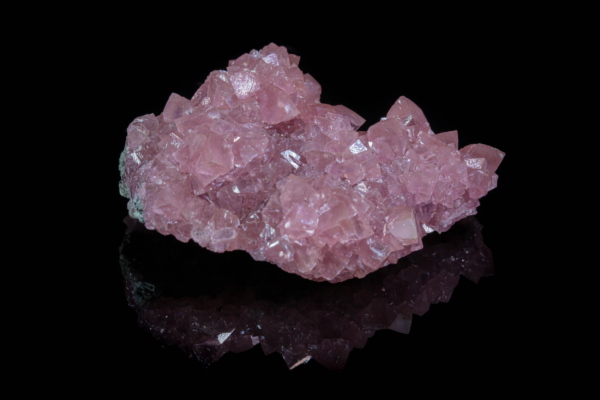
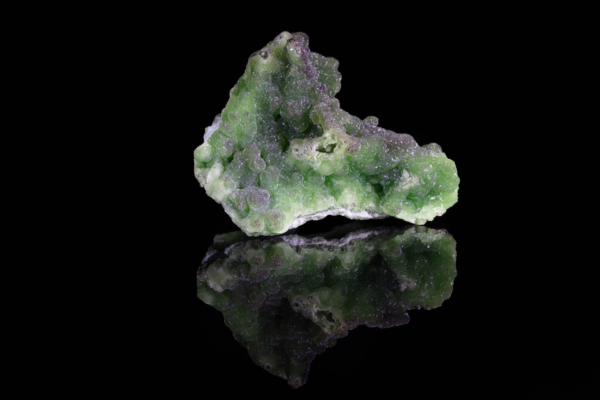
Smithsonite is a zinc carbonate, and one of the most colorful minerals a collector can own. It rarely forms sharp crystals, growing instead as smooth, rounded, botryoidal crusts with a soft, almost waxy glow. Traces of other metals tint it: copper makes it blue green, cobalt pink to purple, cadmium yellow. It was named in 1832 for James Smithson, the chemist whose fortune founded the Smithsonian Institution.
Today
Smithsonite is a minor ore of zinc but a major draw for collectors. Its rounded, glowing masses in blue, green, pink, and yellow are widely loved, and the rich blue green from copper and the lavender from cobalt are the most sought after. It is also cut into cabochons and carved as an ornamental stone.
Geology & Occurrence
Formation
Smithsonite forms at the surface, in the weathered, oxidized zone of zinc deposits. As zinc ores break down in air and water, the freed zinc joins with carbonate and grows smithsonite in cracks, cavities, and as crusts over rock. Whatever other metals are present at the time tint the new mineral their own color.
Notable Localities
Historic smithsonite came from Lavrion in Greece and from Tsumeb in Namibia, a source of fine green material. The Kelly mine in New Mexico is famous for its blue green smithsonite, and superb pink and purple pieces have come from Choix in Mexico. It occurs in zinc districts around the world.
The man behind the name never set foot in the country his money transformed. James Smithson was a British chemist who, on his death, left his fortune to the United States to found an institution for the increase of knowledge, in a country he had never once visited. That gift became the Smithsonian, the largest museum complex on Earth, and this quiet zinc mineral carries his name.