Identity
Technical notes (click to open)(click to close)
Name & Human History
Etymology
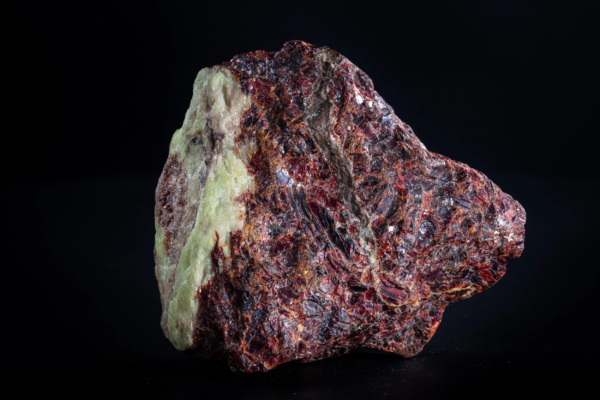
Willemite is a zinc silicate, a fairly plain looking mineral with a secret. In daylight it is often a dull green, brown, or white, and not much to look at. But shine an ultraviolet lamp on it and it blazes a brilliant green. It is named after King Willem the First of the Netherlands, near whose lands it was first found.
Today
Willemite is famous among collectors for its glow. Under ultraviolet light the right specimens flash a vivid green, and some keep glowing for a while even after the lamp is switched off. It was also an important ore of zinc, mined in huge amounts at one remarkable spot in New Jersey, which made this rather rare mineral suddenly important.
Geology & Occurrence
Formation
Willemite forms in zinc deposits, often where older zinc minerals have been altered. At its famous home in New Jersey it grew in a body of zinc ore reshaped by heat, mixed with other zinc minerals in white marble. It also forms in the weathered upper parts of ordinary zinc deposits elsewhere.
Notable Localities
Willemite comes from a few notable places. The mines of Franklin and Sterling Hill, in New Jersey, are world famous for it, both as ore and as glowing specimens. The mineral was first found in Belgium, and fine gemmy green willemite also comes from Tsumeb, in Namibia.
Willemite gave the world its early glow. When scientists learned to make it in the lab and add a touch of manganese, it became the green glowing coating inside the first fluorescent light tubes. So the same mineral that lights up so beautifully under an ultraviolet lamp once helped light our homes and streets. Its partner from New Jersey, zincite, is also held in this collection.