Identity
Technical notes (click to open)(click to close)
Name & Human History
Etymology
Amethyst takes its name from the ancient Greek word amethystos, which means not drunk. The Greeks and Romans believed the purple stone could keep a person sober, so they carved drinking cups from it and wore it at their feasts. The idea may have come from the color itself, since deep purple amethyst can look a little like watered wine. The belief was wrong, but the name has lasted for more than two thousand years.
Through the Ages
For most of history, amethyst was treated as one of the most precious stones on Earth, ranked beside ruby, emerald, and sapphire. Royalty wore it, and the Christian church tied its deep purple to faith and piety, which is why many bishops wore amethyst rings. That high status lasted until the 1800s, when huge new deposits changed everything.
Today
Today amethyst is loved for its color more than for any old belief. Large finds in Brazil and Uruguay in the 1800s brought so much of it to market that it stopped being rare and costly. That did not make it any less beautiful. It is now the most popular purple gem in the world, used in everything from fine rings to large polished geodes sold for the home. February claims it as a birthstone.
Geology & Occurrence
Formation
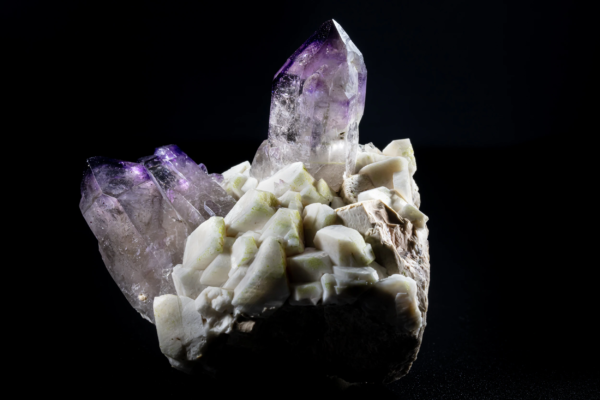
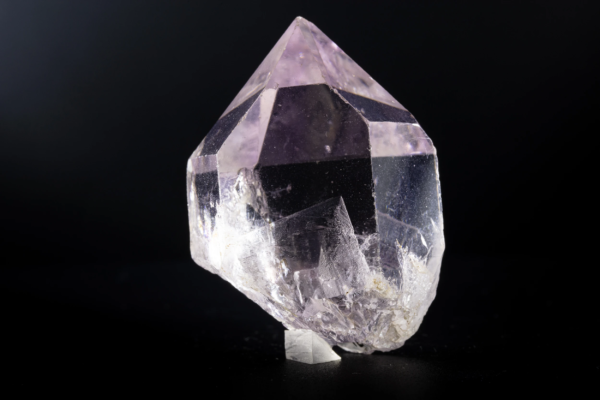
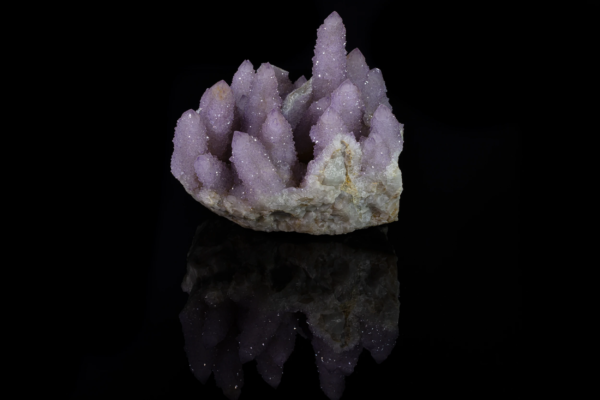
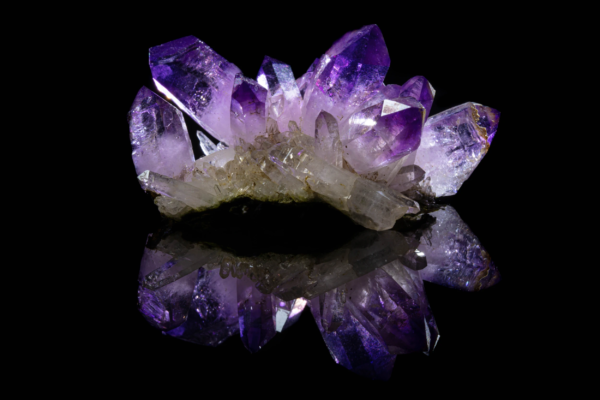
Amethyst is the purple form of quartz, the same common mineral that makes up much of the sand and rock around us. It often grows inside pockets in old volcanic rock, where mineral rich water slowly fills the empty space. The largest pieces line the inside of hollow rocks called geodes, some big enough to stand inside. Its purple color comes from a trace of iron in the crystal, changed over long ages by faint natural radiation in the ground. Gentle heat can turn that purple into the yellow of citrine, which is why much of the citrine sold today began as amethyst.
Notable Localities
Brazil and Uruguay produce huge amounts, often as deep purple crystals lining geodes. Zambia is now prized for some of the richest color of all. Russia was the classic old source, and fine Russian amethyst once set the standard for quality. Mexico offers a bright, clear style from Vera Cruz. Bolivia is the home of ametrine, a rare crystal that is half purple amethyst and half golden citrine.
The most repeated amethyst legend is far younger than it sounds. The tale of a maiden saved by the goddess Diana and stained purple by the wine god Bacchus reads like ancient myth, but it was written in 1576 by the French poet Remy Belleau. The truly old idea is the plain one baked into the name, that purple amethyst could keep wine from going to your head.
Amethyst and citrine are the same mineral wearing different clothes. Both are quartz colored by iron, and gentle heat will turn purple amethyst into golden citrine. Most citrine for sale started life as amethyst before going into a furnace. Once in a while, nature does the heating unevenly and leaves a single crystal that is half purple and half gold. That natural blend is called ametrine, and almost all of it comes from one mine in Bolivia.