Identity
Technical notes (click to open)(click to close)
Name & Human History
Etymology
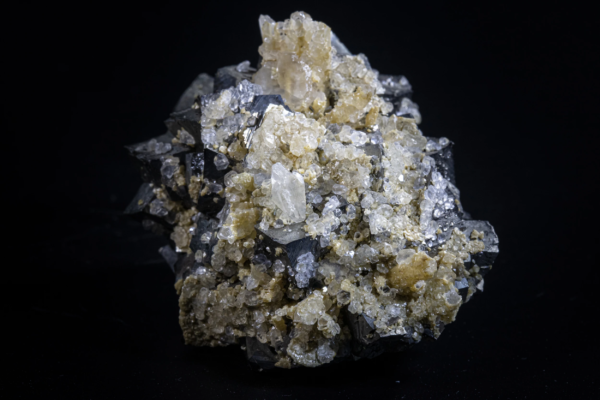
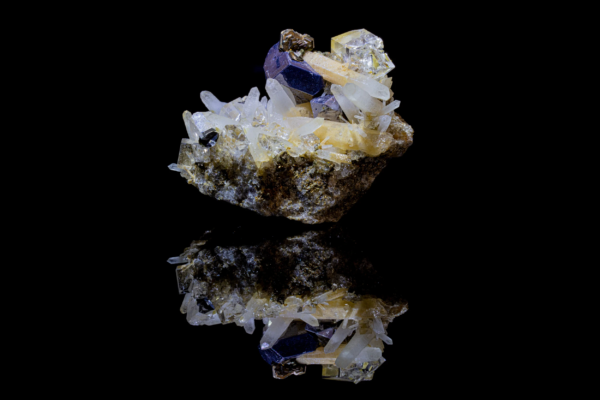
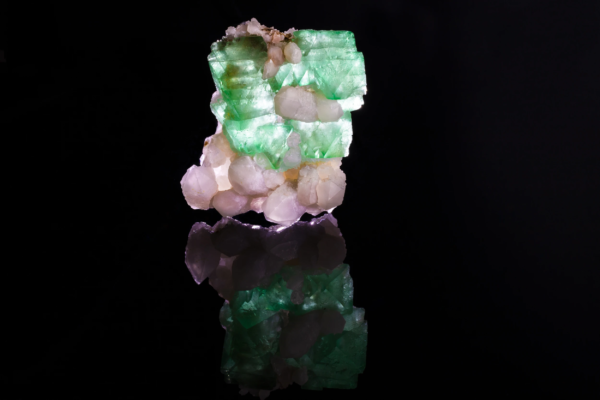
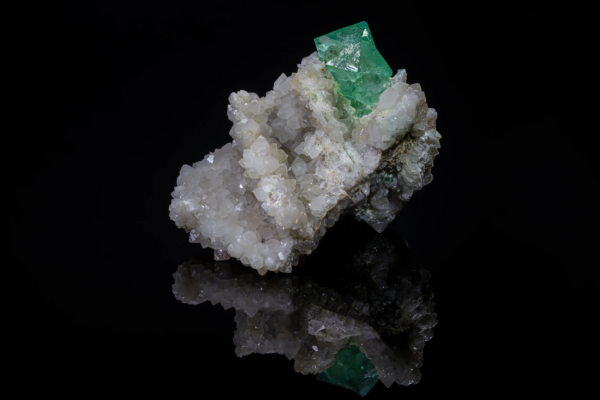
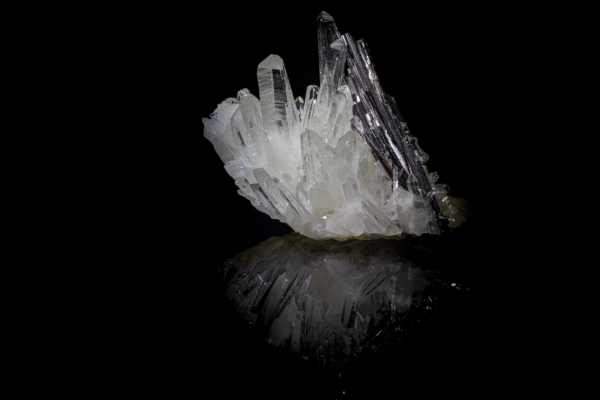
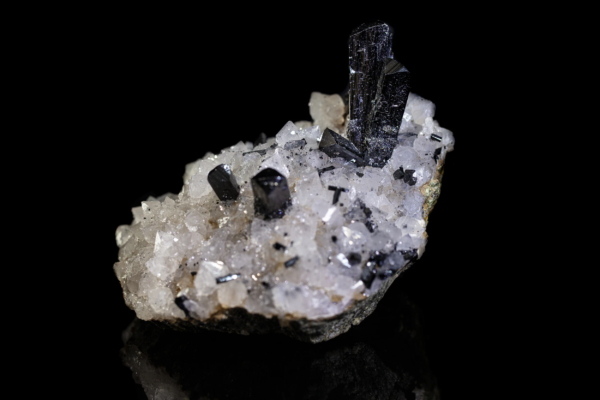
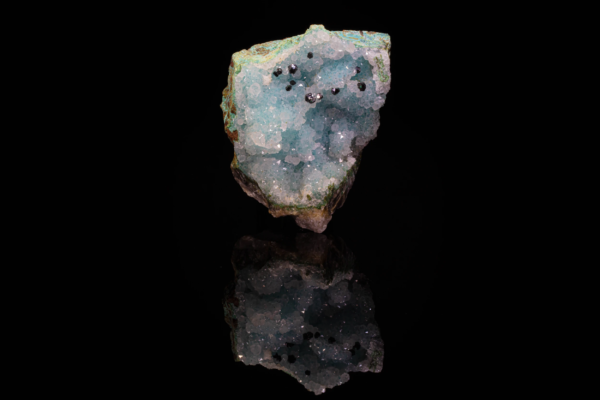
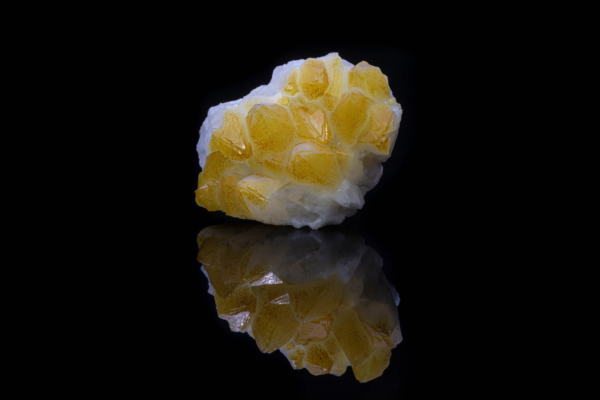
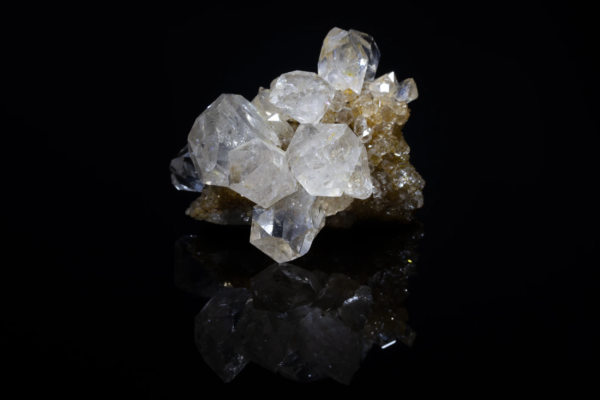
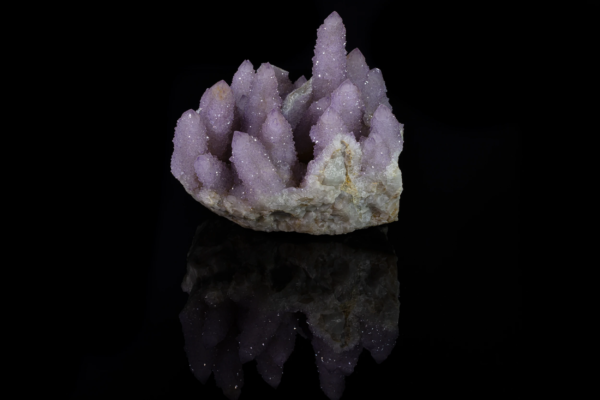
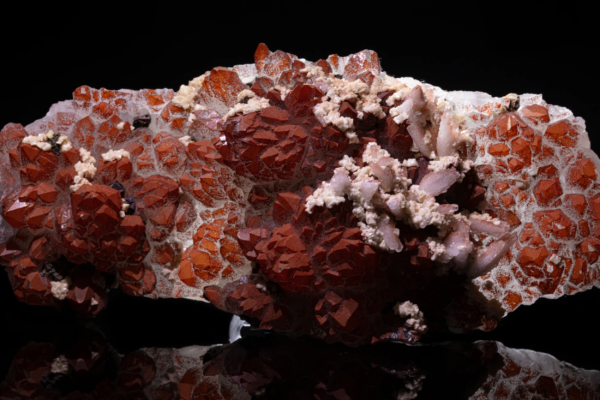
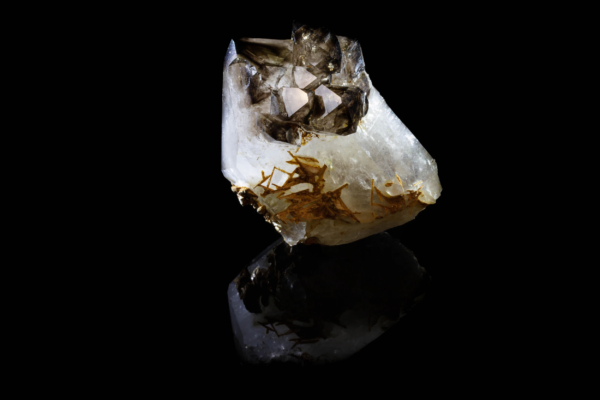
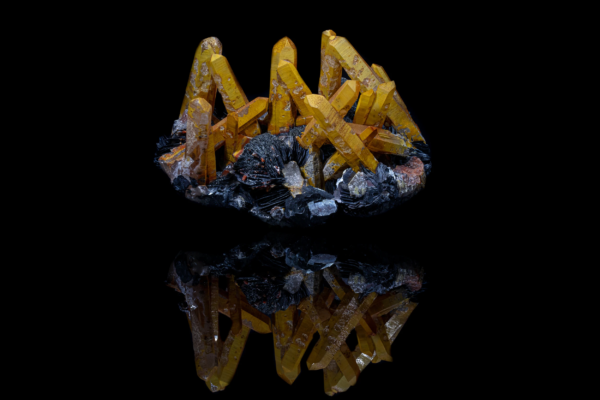
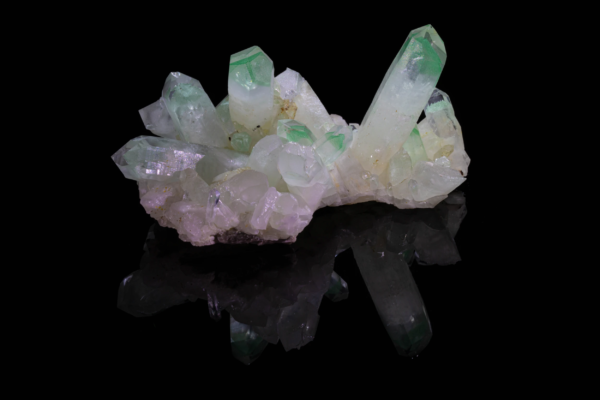
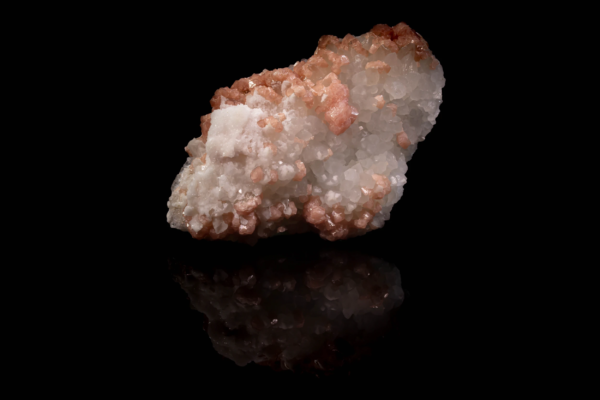
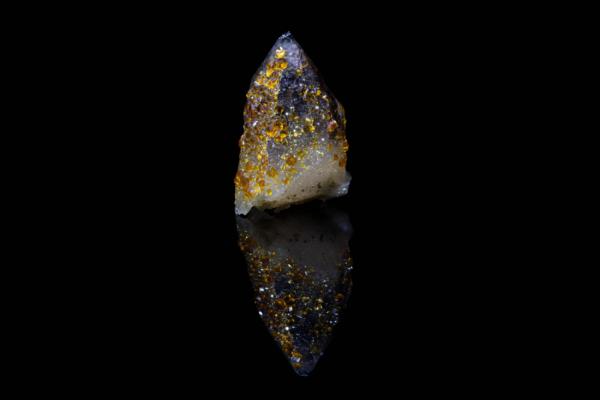
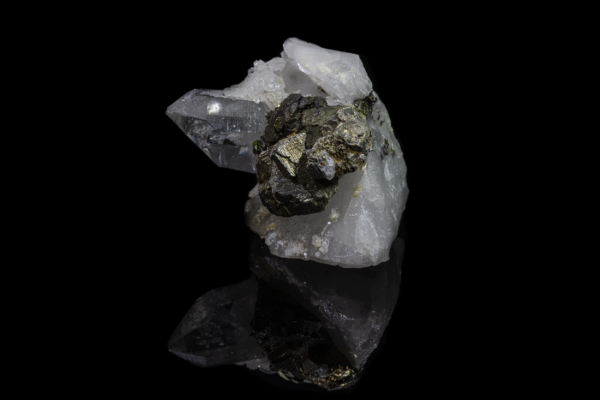
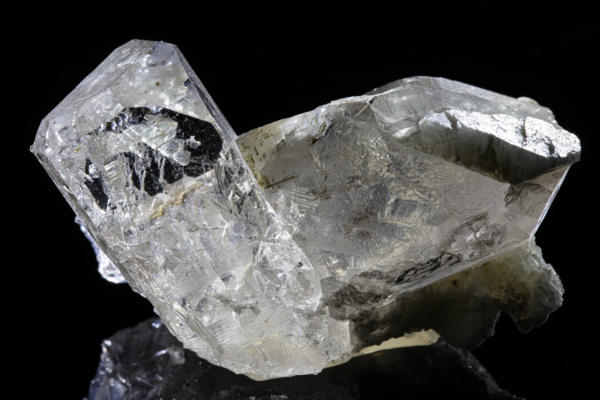
Quartz is the most common mineral at the Earth's surface, the simple union of silicon and oxygen. It is the clear crystal of countless rocks, the sand of most beaches, and the stuff of a whole rainbow of gems. Pure quartz is colorless and glassy, but small traces of other elements paint it purple, pink, yellow, brown, or gray. Its name comes from an old German word for the mineral.
Through the Ages
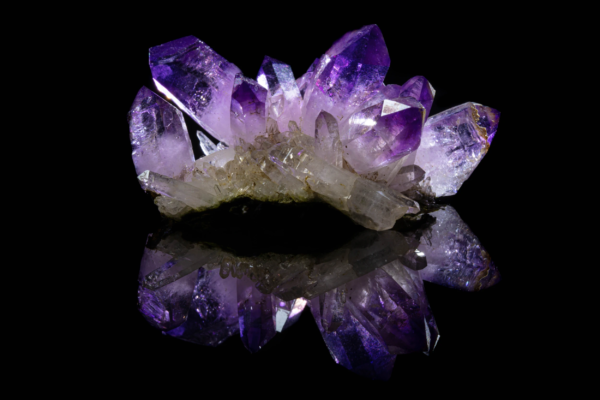
Quartz has been part of human life since the Stone Age. Early people chipped it into tools and weapons, and later carved clear rock crystal into seals and ornaments. Its colored forms became treasured gems. Purple amethyst, golden citrine, and banded agate are all quartz, and several of these varieties are held in this collection under their own names.
Today
Quartz is one of the most useful minerals of all. It is the backbone of glassmaking and a key ingredient in concrete and ceramics. It also holds a hidden power. Squeeze a quartz crystal and it makes a tiny electric pulse, and an electric pulse makes it vibrate at a steady beat. That trick keeps time in quartz watches and steadies the signals in radios and computers.
Geology & Occurrence
Formation
Quartz forms in nearly every setting. It crystallizes from cooling magma, grows in the cracks and veins of many rocks, and gathers as grains in sandstone. Clear crystals line cavities where mineral rich water cooled slowly. Because it is hard and resists weathering, quartz survives where softer minerals wear away, which is why so much sand is quartz.
Notable Localities
Quartz is found the world over, but some places are famous for fine crystals. Clear points come from Arkansas and the Alps. Brazil produces huge crystals and a wealth of colored gem varieties. Amethyst comes from Brazil and Uruguay, and smoky quartz from mountain pockets. Few minerals are at once so common and so prized.
Quartz keeps the time in much of the modern world. The secret is a property called piezoelectricity. A quartz crystal, given a jolt of electricity, vibrates at an extremely steady rate, like a tiny metronome that never tires. A sliver of quartz tuned this way beats inside a quartz watch, ticking off the seconds with great precision. The same trick steadies the heartbeat of radios, phones, and computers.