Identity
Technical notes (click to open)(click to close)
Name & Human History
Etymology
Aragonite is calcium carbonate, the very same recipe as the common mineral calcite. Yet the two are not the same. Their atoms are stacked in different patterns, so they grow into different shapes and count as separate minerals. Aragonite was named in 1797 after Molina de Aragon, the Spanish village where it was first studied. Many writers later wrongly tied the name to the wider region of Aragon.
Today
Aragonite has a hidden talent. It is the mineral that builds pearls and seashells. Most shellfish line their shells with it, layering it into the glowing surface we call mother of pearl. A pearl is mostly aragonite, laid down ring by ring around a speck of grit. So while collectors enjoy its crystals, the sea has been quietly growing aragonite all along.
Geology & Occurrence
Formation
Aragonite forms in cool places near the surface, in caves, hot springs, and shallow water. It also forms inside living things, in shells and coral. Out in the rock it grows in many shapes, from slim needles to delicate coral like sprays called flower of iron, so fragile they can snap at a touch. Over very long spans of time, aragonite slowly turns into the steadier calcite.
Notable Localities
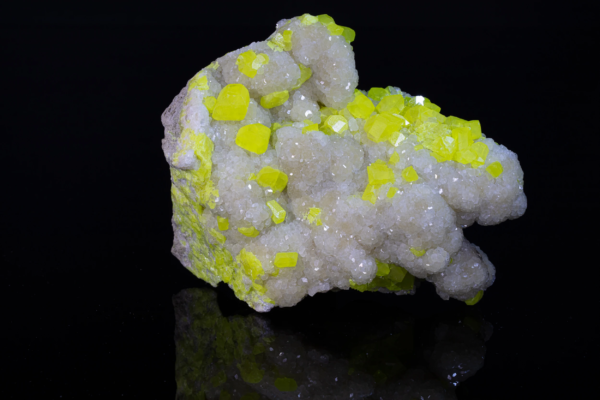
The Spanish village of Molina de Aragon gave aragonite both its name and its first famous crystals. Sicily produces striking pieces from its sulfur mines, where pale aragonite sits beside bright yellow sulfur. Morocco is known for clusters of reddish crystals that fan out like tiny stars. Austria long supplied the fragile coral like kind from its iron mines.
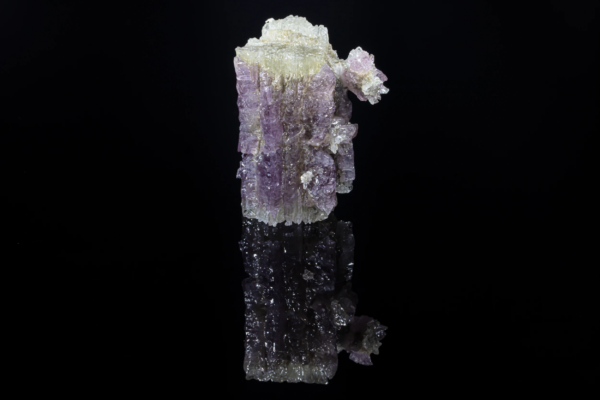
One of aragonite's best tricks fools the eye. Its crystals often grow in threes, fusing so neatly that the result looks like a single six sided crystal. That false six sided shape can pass for calcite or quartz at a glance. The giveaway is the fine lines across the top, a sign that three crystals, not one, have grown together as a clever natural twin.