Identity
Technical notes (click to open)(click to close)
Name & Human History
Etymology
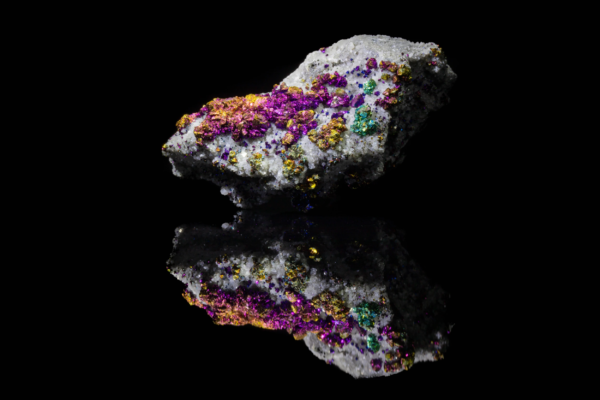
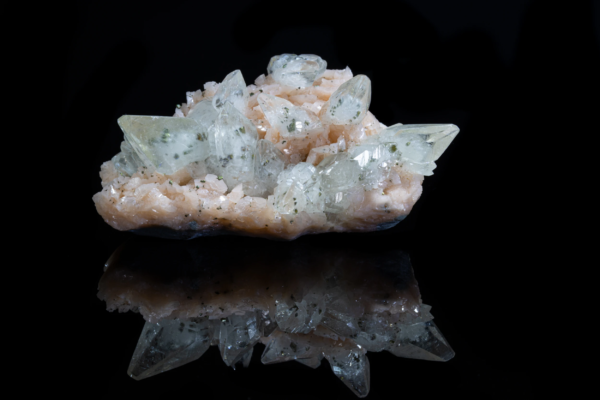
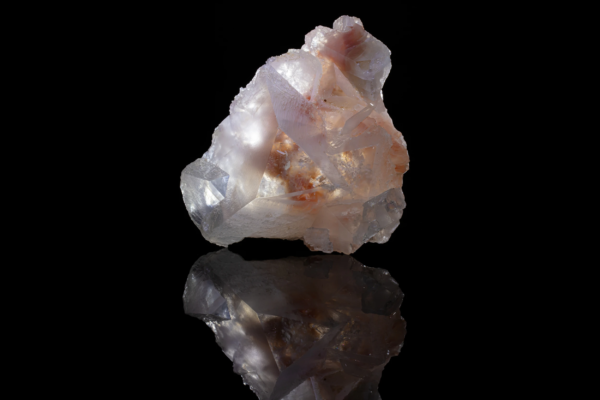
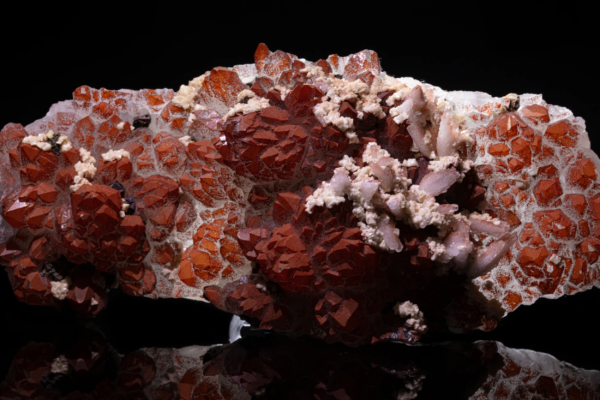
Dolomite is a common carbonate mineral, often seen as creamy white or soft pink crystals with a curved, saddle like shape. It is closely related to calcite, but with magnesium added alongside the calcium. The mineral honors a French geologist, Déodat de Dolomieu, who first told it apart from ordinary limestone in the late 1700s. A whole mountain range, the Dolomites of Italy, was later named after him too.
Today
Dolomite is both a mineral and a rock. Vast layers of dolomite rock, also called dolostone, form thick beds in the Earth's crust, and they store much of the world's groundwater and oil. As a mineral, dolomite is a source of magnesium and is used to make cement, glass, and steel. Collectors enjoy its glassy, pink, saddle shaped crystals, often grown on a bed of darker ore.
Geology & Occurrence
Formation
Dolomite forms in a way that still puzzles scientists. Most of it did not grow directly. Instead, beds of limestone, made of calcite, slowly had some of their calcium swapped for magnesium by passing fluids, turning them into dolomite. Strangely, this change is common in ancient rocks but rare today. Why dolomite barely forms in the modern world is a real puzzle, known as the dolomite problem.
Notable Localities
Dolomite is found all over the world, since it makes up entire mountain ranges. Fine pink crystals come from Spain and from Brazil. Switzerland and Mexico produce clear, glassy specimens. In the United States, dolomite lines cavities in the lead and zinc mines of the Midwest. It is one of the most widespread minerals on Earth.
The man behind dolomite led a dramatic life. As a young soldier, Déodat de Dolomieu killed a fellow officer in a duel and was sentenced to death at just eighteen. He was pardoned, and he turned from soldiering to the study of rocks. He found the mineral that bears his name while exploring, and even kept working on his science during a later imprisonment. The famous Dolomite mountains carry his name to this day.