Identity
Technical notes (click to open)(click to close)
Name & Human History
Etymology
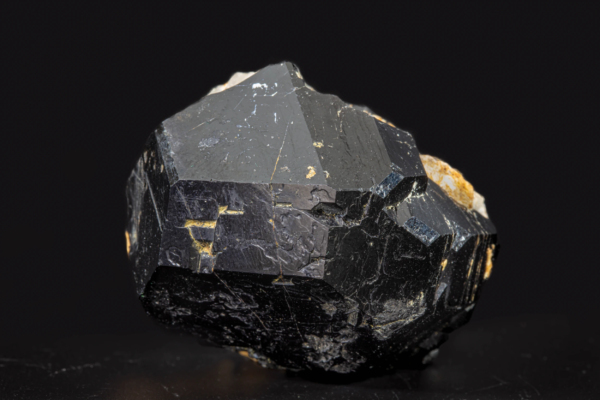
Dravite is the brown member of the tourmaline family, one of the most colorful groups of gems on Earth. The tourmalines all share one structure but come in many colors, set by the metals inside them. Dravite is rich in magnesium, which gives it warm shades of brown and golden yellow. It is named for the Drava River, in a region split today between Austria and Slovenia, where it was first described in the 1880s.
Today
Dravite is the quiet, earthy cousin of the flashier tourmalines. Where some tourmalines glow pink, green, or blue, dravite is usually a calm brown, and so it is less used in jewelry. But a clear, well cut dravite has a warm, root beer glow that collectors enjoy. And one special form, colored green by chromium, is a prized gem in its own right.
Geology & Occurrence
Formation
Dravite forms in metamorphic rocks, the kind made when heat and pressure reshape older stone. It favors rocks rich in magnesium, especially marble and certain schists. This sets it apart from the other tourmalines, which mostly grow in the coarse veins called pegmatites. Dravite usually appears as stout, three sided prisms with deeply grooved faces.
Notable Localities
The first dravite came from the Drava River district, now partly in Slovenia, which remains its namesake home. Some of the finest brown crystals come from Yinnietharra in Western Australia. The green, chromium rich dravite, sometimes sold as chrome tourmaline, comes mostly from Tanzania. Good crystals also turn up in Brazil and in upstate New York.
Dravite is one of three main kinds of tourmaline, and together they tell the family story. Schorl, the black one, is full of iron and by far the most common. Elbaite, rich in lithium, brings the famous pinks, greens, and blues. Dravite, full of magnesium, brings the browns. All three grow as the same three sided prisms, differing mainly in the metals they carry and the colors those metals paint.