Identity
Technical notes (click to open)(click to close)
Name & Human History
Etymology
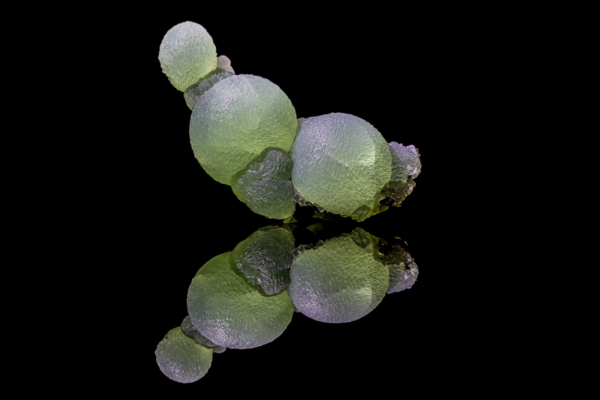
Epidote is a common green mineral, best known for a rich shade collectors call pistachio green. It is a silicate of calcium, aluminum, and iron. The more iron it holds, the deeper and darker its green becomes. Its name comes from a Greek word meaning increase, because one side of the base of its crystal is longer than the other. A French scientist gave it that name in 1801.
Today
Epidote is a workhorse of the rock world that also delights collectors. It is one of the most common minerals formed when rock is reshaped by heat and pressure. Geologists use it to read the history of the Earth's crust. For collectors, well formed epidote crystals are a prize. They grow as long, grooved, glassy prisms in a deep green that can glow when the light is right.
Geology & Occurrence
Formation
Epidote forms mainly during metamorphism, the slow change of rock under heat and pressure. It also grows when hot fluids alter the minerals in igneous rock, and in the zones around cooling magma. It often appears as prismatic crystals lining cracks and cavities, sometimes in radiating sprays. A rock made mostly of quartz and epidote is called epidosite.
Notable Localities
The finest epidote crystals in the world come from the Knappenwand, in the Austrian Alps, now a protected site. There, long, dark green prisms grew in alpine pockets, some reaching remarkable sizes. Superb gemmy crystals also come from the mountains of Pakistan. Fine green epidote is found in Alaska, Brazil, and across the Alps as well.
Epidote lends its name to a whole family of minerals. The epidote group includes several related species. One is clinozoisite, which is poor in iron and paler. Another is piemontite, which holds manganese and glows red. They all share the same basic structure, differing mainly in the metals they carry. Epidote, the iron rich and most common member, gives the group both its name and its familiar green.