Identity
Technical notes (click to open)(click to close)
Name & Human History
Etymology
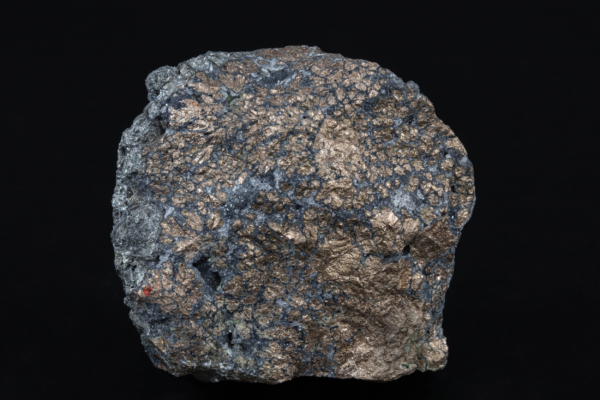
Nickeline is a pale, copper red metal mineral, a compound of nickel and arsenic. It is dense, opaque, and has a dull metallic shine, with a color close to that of copper. It is an important ore of nickel. The mineral has a colorful name with a story behind it, tied to old miners who were fooled by its coppery look.
Today
Nickeline is valued as a nickel ore and as a collector mineral with a famous past. Its coppery color is unusual and striking. One thing to watch is that, in damp air, nickeline slowly grows a green coating of another mineral, so a specimen is best kept dry. Because it holds arsenic, it is also wise to wash hands after handling it.
Geology & Occurrence
Formation
Nickeline forms in veins deposited by hot fluids. It grows in deposits rich in nickel, cobalt, and silver, often beside those metals. It can also form where nickel bearing sulfides are altered. The crystals are rare, so nickeline is usually seen as solid masses with that telltale pale copper red color.
Notable Localities
Nickeline comes from old mining districts in several countries. Germany, in the Harz mountains and Saxony, is a classic source, as are the Czech lands and Austria. The great silver and cobalt mines of Cobalt, in Ontario, Canada, also produced fine nickeline. Good material comes from a number of historic European veins.
Nickeline is the mineral that gave nickel its name, and the tale is a good one. Medieval German miners found a red ore that looked like copper, but no copper could be won from it, and working it made them sick. They blamed a mischievous mountain sprite called Nickel, a kind of goblin. The name stuck, and the metal later drawn from the ore became nickel.