Identity
Technical notes (click to open)(click to close)
Name & Human History
Etymology
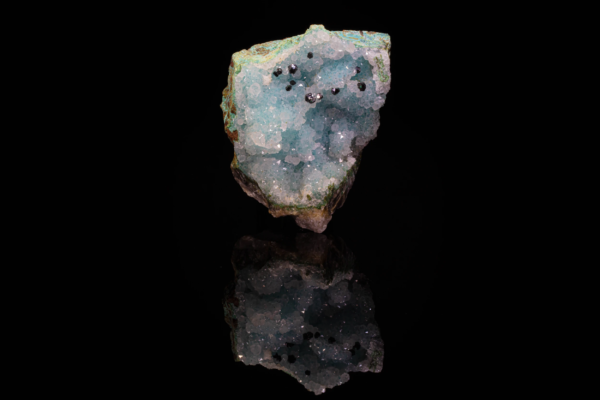
Paratacamite is a green to greenish black copper mineral, a basic copper chloride. It is one of a small family of minerals born of copper, water, and salt. Its name marks its kinship with atacamite, the green copper mineral of the Atacama desert. Paratacamite is the close cousin. It shares the desert and much of the chemistry, but is built on a slightly different plan.
Today
Paratacamite is a collector's mineral, valued more for its science than its looks. It forms small green crystals and crusts, rarely showy on their own. Its real interest lies in the puzzle it poses. It sits among a knot of look alike copper chlorides. These took chemists a long time to tell apart, and they still need careful study to name with confidence.
Geology & Occurrence
Formation
Paratacamite forms at the surface, where copper deposits weather in a dry climate. There copper, set free from its ores, joins with chlorine from salty ground water to build green copper salts. One quirk sets paratacamite apart. It needs a small amount of zinc, or a similar metal, woven into its structure to hold its form together.
Notable Localities
Paratacamite comes mainly from the copper deposits of the Atacama, in northern Chile. Its home ground is the Caracoles district, in the dry hills of the Antofagasta region, where it was first defined. Like its relatives, it is a child of that rainless desert. There rare copper salts survive that would wash away anywhere wetter.
Paratacamite sits at the heart of a naming tangle. It belongs to a trio of green copper chlorides, with atacamite and clinoatacamite, that look almost the same. For years many specimens were labeled paratacamite by mistake. Careful study later showed that most were really clinoatacamite, and that true paratacamite needs a trace of zinc to exist. Only laboratory tests can name them for sure.