Identity
Technical notes (click to open)(click to close)
Name & Human History
Etymology
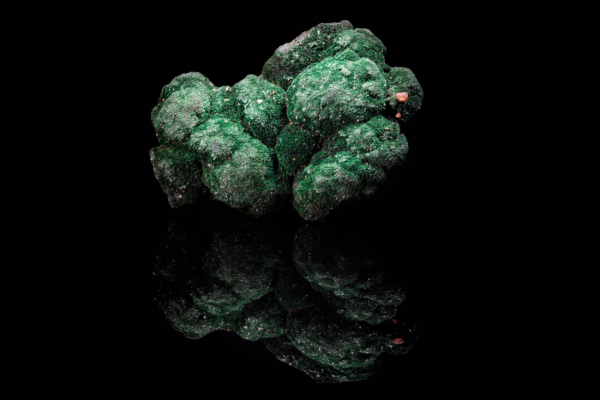
Atacamite is a deep green copper mineral named after one of the driest places on Earth. It was first identified in the Atacama Desert of northern Chile and given that name in 1802. The desert is so dry that rain almost never falls. That bone dry air is exactly what atacamite needs to form. It is a copper mineral that also contains chlorine, a fairly unusual mix.
Today
Atacamite is rare and prized by collectors for its intense color, an emerald to almost black green. It is rather soft and dissolves in water, so it asks for gentle, dry care. It also serves as a useful sign in the field. The mineral forms only where copper is present. So a flash of its green can tell a prospector that copper ore lies in the rock nearby.
Geology & Occurrence
Formation
Atacamite forms near the surface, where copper ore slowly weathers in dry, salty conditions. The salt provides the chlorine, and the copper provides the green. The two combine into atacamite, often as small, sharp, glassy crystals or green crusts. It keeps company with other colorful copper minerals like malachite, azurite, and chrysocolla.
Notable Localities
The Atacama Desert in Chile, the mineral's namesake, remains a classic source. Fine crystals also come from Broken Hill in Australia and from Tsumeb in Namibia, one of the richest mineral sites on Earth. The copper district of Bisbee in Arizona has produced good green atacamite as well, alongside its famous blue azurite.
Atacamite has a darker side in museums. The same green that delights collectors can appear as a creeping crust on ancient bronze and copper. There it signals a slow rot called bronze disease. Born of copper, salt, and damp air, it eats into the metal of old statues and coins. Conservators watch for its green bloom and work to stop it before it destroys a treasured piece.