Identity
Technical notes (click to open)(click to close)
Name & Human History
Etymology
Chrysocolla is a soft mineral in cool shades of blue and green, the color of a tropical sea. Its name is a window into the ancient world. It comes from two Greek words meaning gold and glue. Long ago, goldsmiths used a similar blue green copper material as a flux, a kind of glue, to solder gold. The Greek thinker Theophrastus wrote the name down more than two thousand years ago, and it stuck to this stone.
Today
Chrysocolla is loved for its color but tricky to wear. In its pure form it is very soft and porous, soft enough to scratch with a fingernail, and it soaks up liquids like a sponge. When it grows mixed with hard quartz, though, it becomes tough and gem worthy. This hard, vivid blue green form is sold as gem silica, one of the most prized of all copper gems. People often mistake chrysocolla for turquoise.
Geology & Occurrence
Formation
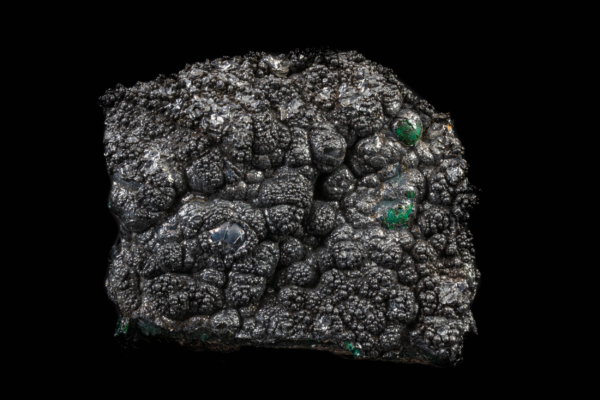
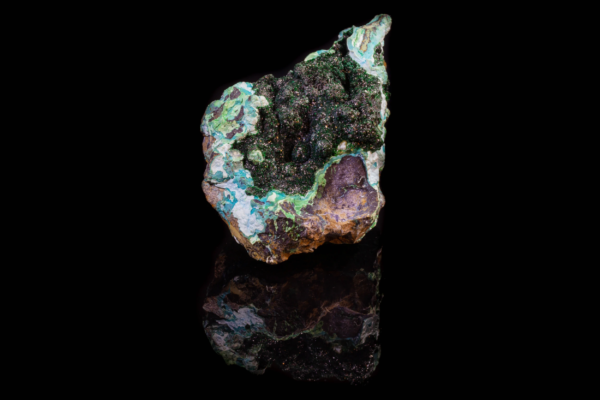
Chrysocolla forms near the surface, where copper ore breaks down in air and water. It does not usually grow as neat crystals. Instead it appears as smooth, bubbly crusts and rounded masses, often draped over rock like a glaze. It keeps close company with the other bright copper minerals, the green of malachite and the blue of azurite, and the three are often found together.
Notable Localities
Chrysocolla turns up wherever copper has weathered at the surface. Arizona is famous for it, especially the gem silica from its great copper mines. Fine material also comes from Peru, Mexico, and the copper belt of the Congo. In Israel, near the old mines at Eilat, chrysocolla mixes with turquoise and malachite to make a blue green stone sold as Eilat stone.
The name chrysocolla is older than almost any mineral name still in use. It was coined by the Greek philosopher Theophrastus around 315 BC, for a blue green copper material that goldsmiths kept on hand. They used it as a flux to help weld tiny gold beads together, a trick called granulation. The mineral we call chrysocolla today probably is not the exact substance they meant, but the ancient name for gold glue has stayed with it ever since.