Identity
Technical notes (click to open)(click to close)
Name & Human History
Etymology
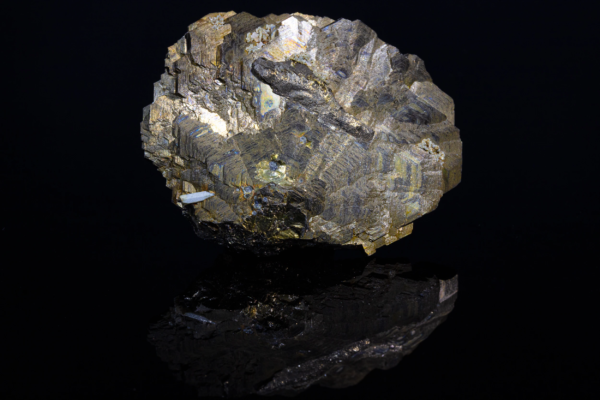
Pyrrhotite is a bronze colored iron sulfide, a cousin of pyrite with one striking difference. It is magnetic. The name comes from a Greek word for reddish, after its warm bronze color, which often tarnishes to a dull, iridescent brown. Unlike most minerals, pyrrhotite has a recipe that is slightly short of iron, with tiny gaps in its structure that give it its magnetic pull.
Today
Pyrrhotite is valued by collectors and watched closely by miners. Good crystals are rare and prized, often bronze tablets or barrels on a bed of other minerals. In bulk it is important too, because it usually travels with pentlandite, the main ore of nickel. So where pyrrhotite is found in quantity, a nickel mine may not be far away.
Geology & Occurrence
Formation
Pyrrhotite forms deep in the Earth, mostly from molten rock. As certain magmas cool, heavy droplets of iron sulfide settle out and gather at the base, building rich beds of pyrrhotite and its companions. It also grows in hot veins and in rocks reshaped by heat. It is almost always found massive, mixed with other sulfides.
Notable Localities
Pyrrhotite comes from ore districts around the world. The huge nickel deposits of Sudbury, in Ontario, Canada, hold vast amounts of it. Fine bronze crystals come from Santa Eulalia in Mexico and from Trepca in Kosovo. Good pyrrhotite is also found in Norway and in many other base metal deposits.
Pyrrhotite carries the rare gift of magnetism. Most brass colored sulfides look much alike, but only pyrrhotite will tug at a magnet, so a small magnet is the quickest way to name it. Its magnetic pull comes from the gaps in its iron, an unusual quirk of its structure. One word of care, though. Like pyrite, pyrrhotite can slowly break down in damp air, so it is best kept dry.