Identity
Technical notes (click to open)(click to close)
Name & Human History
Etymology
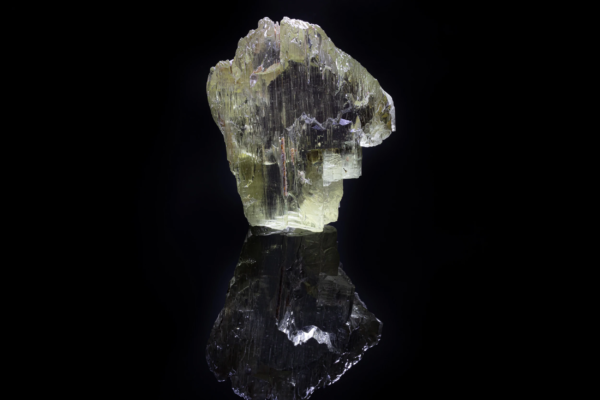
Spodumene is a lithium mineral, a silicate of lithium and aluminum, and a member of the pyroxene family. It is usually pale, in shades of white, gray, or soft pink and green. It forms long, flat, striated crystals that can reach truly giant size. Its name comes from a Greek word for burnt to ashes, after the dull gray color of the common kind.
Today
Spodumene is one of the world's main sources of lithium, the light metal at the heart of modern batteries. It is also a gem. Clear pink to lilac crystals are cut as kunzite, and green ones as hiddenite. These gems are delicate and prone to splitting. Their color can fade in sunlight, so they are kept for display rather than daily wear.
Geology & Occurrence
Formation
Spodumene forms in special veins called pegmatites. There a granite magma cools slowly and gathers rare, light elements like lithium. The mineral crystallizes alongside other lithium minerals. Because pegmatites can grow crystals to enormous size, spodumene is famous for some of the largest crystals on Earth.
Notable Localities
Spodumene comes from lithium pegmatites around the world. The gem variety kunzite comes from Afghanistan, Pakistan, Brazil, and California. Green hiddenite comes from North Carolina. Vast deposits mined for battery lithium lie in Australia and the Congo, where the mineral is dug by the ton.
Spodumene holds the record for some of the biggest crystals ever found. In the Black Hills of South Dakota, a single crystal measured about forty seven feet long and weighed many tons, longer than a school bus. Such giants grow in pegmatites, where slow cooling and rich fluids let one crystal swell to a monstrous size. Its pink gem form, kunzite, is also held in this collection.