Identity
Technical notes (click to open)(click to close)
Name & Human History
Etymology
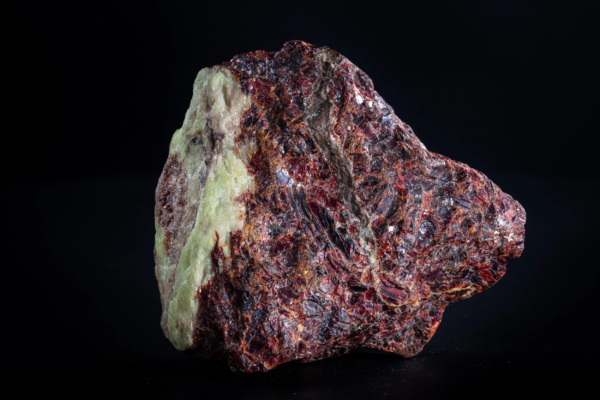
Zincite is a deep red to orange mineral, a simple oxide of zinc. Pure zinc oxide is white, but a touch of manganese turns natural zincite a rich red orange. It is quite rare in nature, found in real quantity at only one famous place. It was one of the earliest minerals ever described in the United States.
Today
Zincite is treasured by collectors, partly for its rarity and partly for its warm color. Good red crystals are scarce and prized. It was also an ore of zinc at its famous home, where it grew alongside other zinc minerals. A word of caution though, since most of the bright, gemmy zincite sold today is not natural at all.
Geology & Occurrence
Formation
Zincite forms in zinc deposits reshaped by heat. At its great locality in New Jersey it grew in a body of zinc ore turned to stone by deep heat, mixed with black franklinite and white marble. Natural zincite is otherwise very uncommon, turning up only in scattered traces elsewhere.
Notable Localities
Zincite comes above all from New Jersey. The mines of Franklin and Sterling Hill are its classic and almost only major home, where red zincite, black franklinite, and green glowing willemite share the same rock. Small amounts have been found in Namibia, Italy, and a few other places.
Zincite has a curious modern twist. Much of the bright red and orange zincite seen for sale grew not in the Earth but in the flues of old zinc smelters in Poland, where furnace fumes crystallized into gemmy crystals. They are lovely, but they are not natural stones. Its New Jersey companion, willemite, is also held in this collection.