
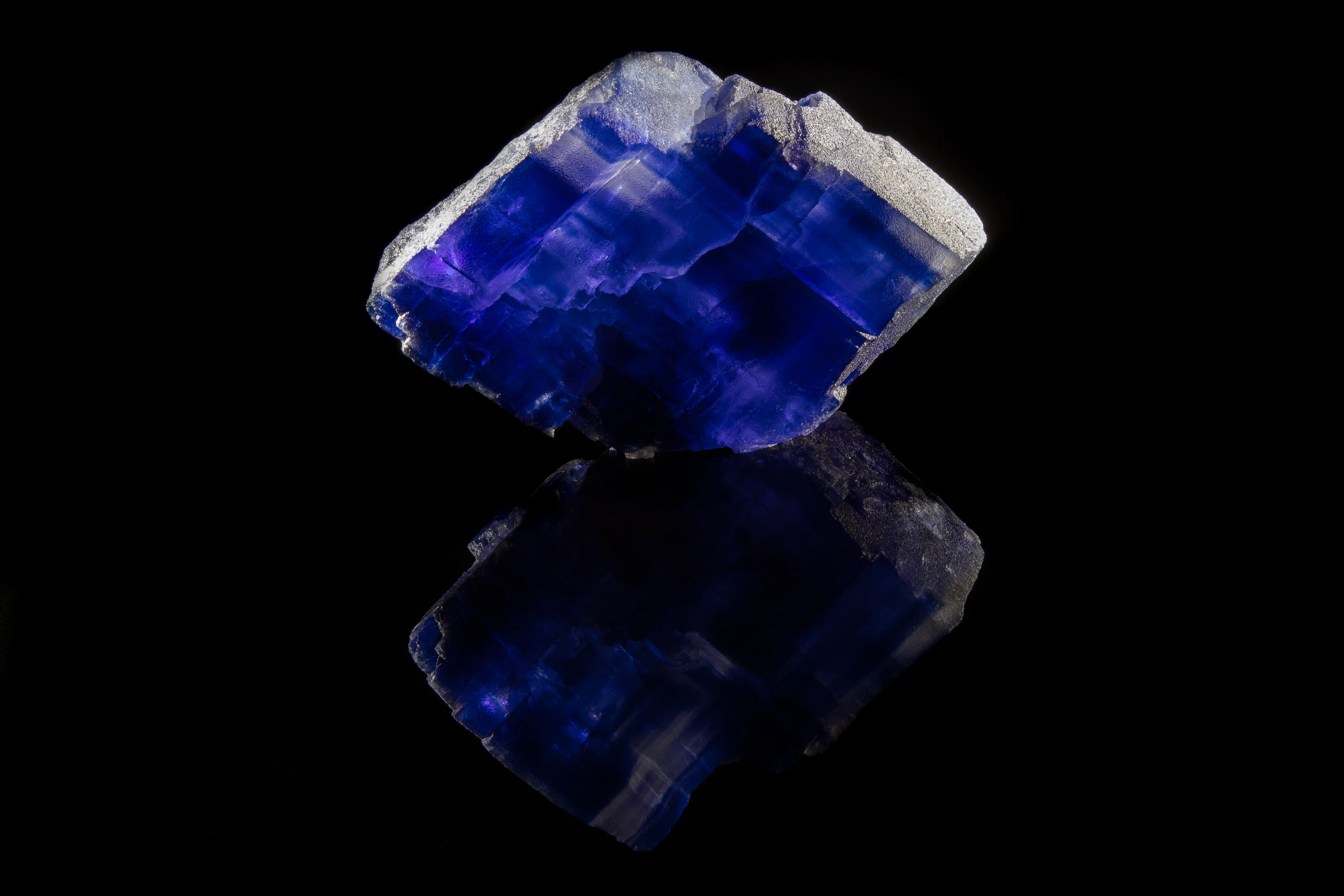
Halite (Deep Blue)

The Specimen

Cabinet: Large Cabinet (10 cm+) – Size: 20 x 12 x 10 cm Origin: Heringen (Werra), Hersfeld-Rotenburg, Hesse – Germany History: Ex Jack Halpern Collection

Notes

This specimen comes from Heringen, on the Werra River in Hesse, central Germany, home of the Wintershall potash works. The salt beds of the Werra-Fulda district date from the Permian, roughly 270 to 290 million years ago. Halite is common salt and is normally colorless, but here it forms a large block of deep blue with violet zones, built of stacked cubic steps, with paler, frosted edges. Backlit, it shows banded patterns of color. The blue has no chemical cause: dissolved and recrystallized, blue halite gives only colorless salt. It comes from defects in the crystal structure, most likely created by natural radiation, and research on the exact cause is ongoing. A 2014 study of blue halite from Poland linked the color to these defects, possibly produced by radiation from potassium-40. This piece belonged to Jack Halpern of San Francisco, whose collection was built over decades. According to the dealer, he bought it more than 40 years ago and kept it on display in his home ever since. It weighs 2.2 kg.

Mineral Species

Did you know?

Halite is rock salt, and salt was once so valued that the word salary is said to come from it, from rations given to Roman soldiers.