Notes
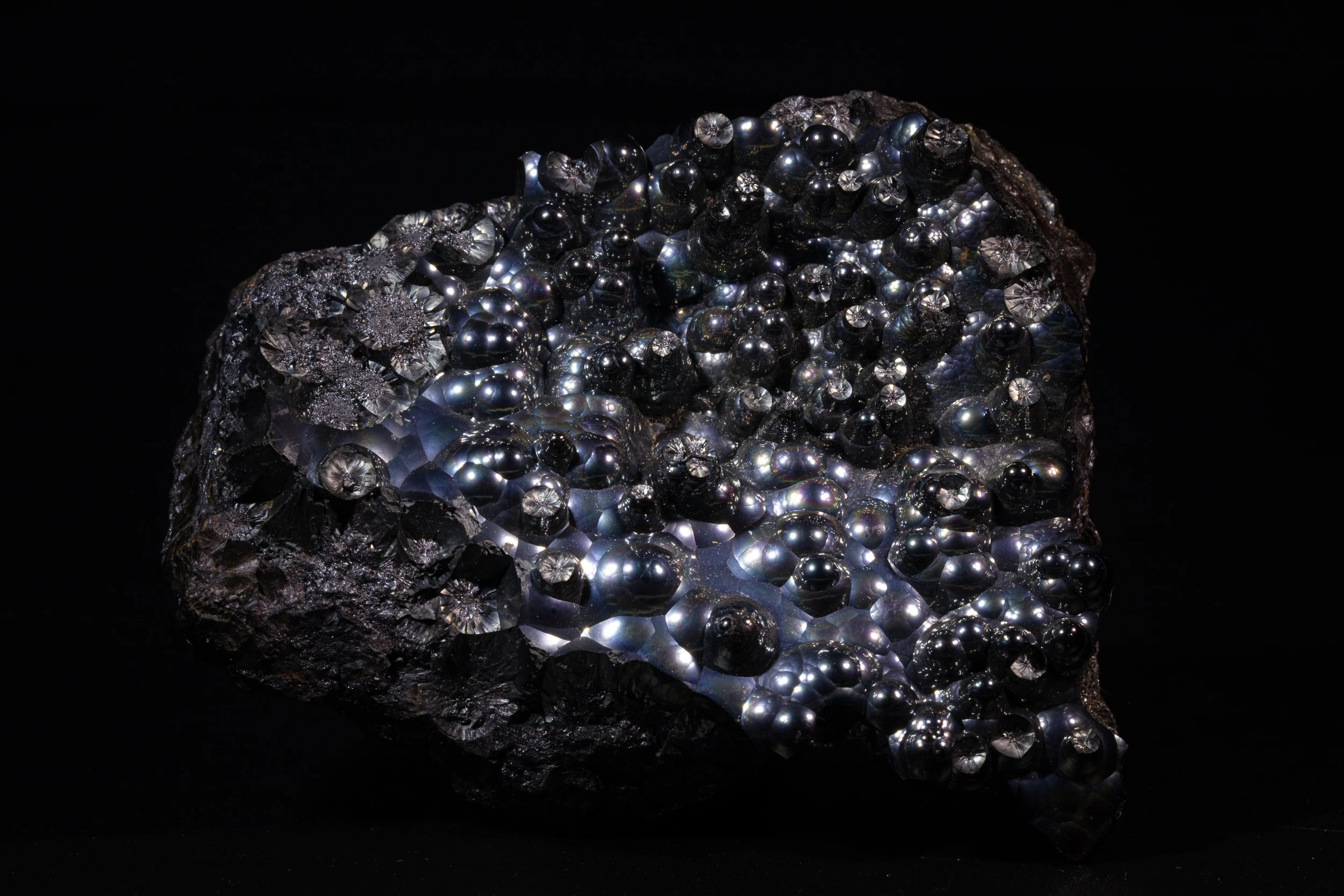
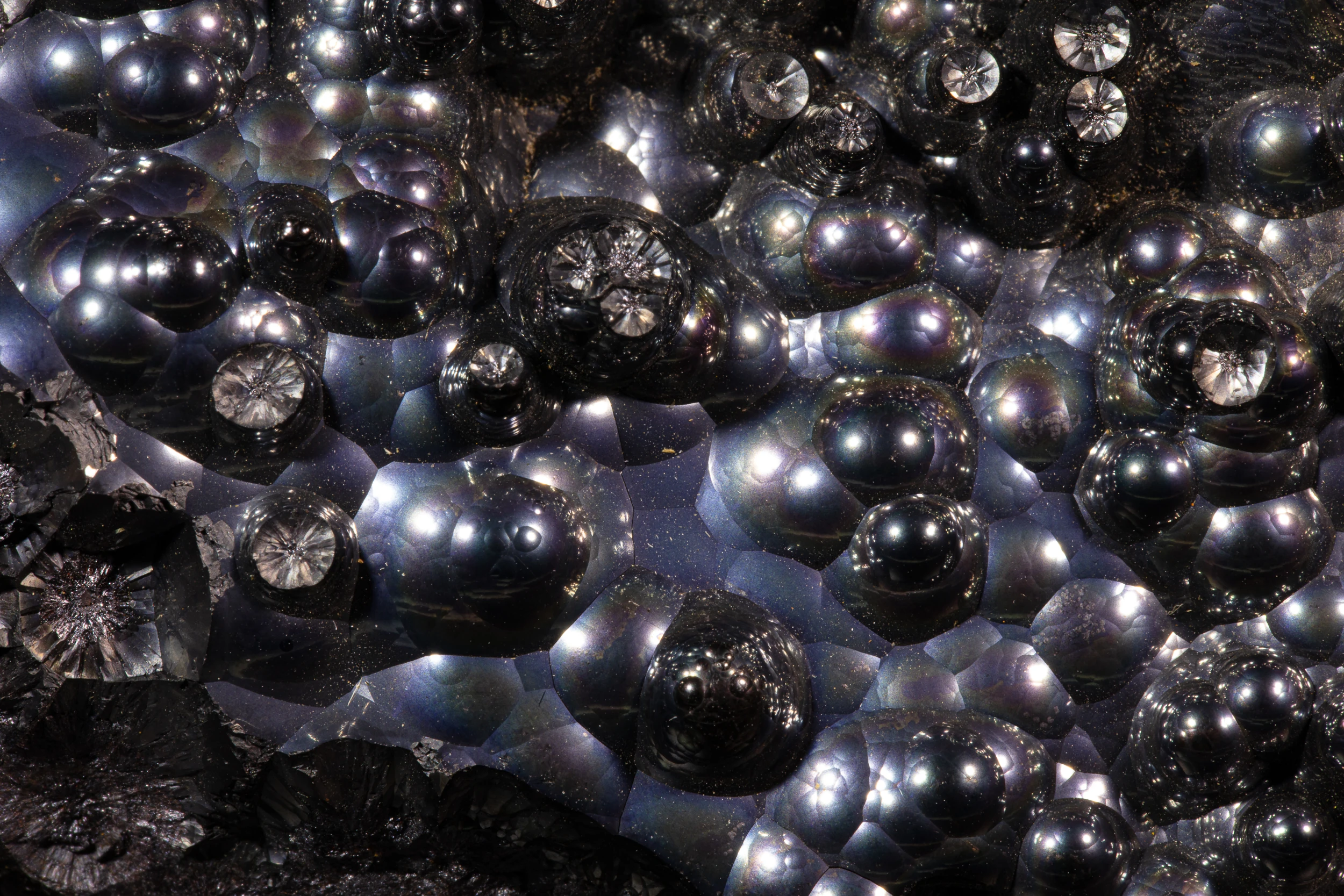
This specimen comes from the Salisbury Mine on Ore Hill, in Salisbury, Litchfield County, northwestern Connecticut. Iron ore was discovered there in 1732. Mining was sporadic until 1884, then heavy until 1904, with about 200 miners taking out 5,000 tons a year, and it was the last goethite mine in the district to close, in 1923. Salisbury iron has a place in American history: during the Revolution, the Salisbury furnace cast about three quarters of the cannons made at home for the Patriots. Here, lustrous black goethite forms rounded botryoids and short stalactites with a blue iridescent sheen. Where a few stalactites have broken, their cross-section shows fibers radiating from the center. This old-timer once belonged to the Paterson Museum in New Jersey, founded in 1925, whose mineral collection became one of the largest in the state.