Identity
Technical notes (click to open)(click to close)
Name & Human History
Etymology
Goethite is a brown to yellow iron mineral, and it is one of the main things that makes rust. It is the rusty stain on old iron, the brown of muddy riverbeds, and a big part of the soft ore miners call limonite. The mineral was named in 1806 to honor the German writer Goethe, who was also a keen collector of minerals. Its name is said roughly as GUR-tite.
Today
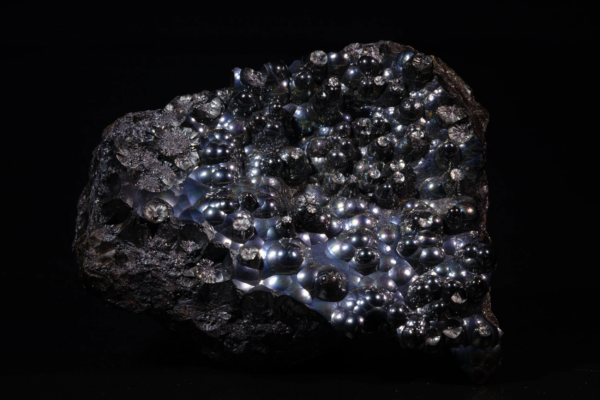
Goethite is more useful than its humble looks suggest. As a major iron ore, it has been smelted for iron since ancient times. Ground up, it makes yellow and brown ochre, among the oldest pigments known, used in cave paintings tens of thousands of years ago. Collectors prize its glossy, rounded, black brown crusts and its sparkling velvety sprays of fine crystals.
Geology & Occurrence
Formation
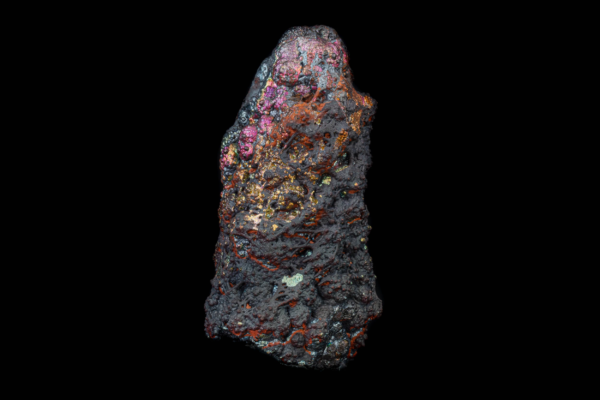
Goethite forms when other iron minerals weather and break down in air and water. It is a mineral of the surface, building up in the rusty cap that sits over many ore deposits. It often grows as rounded, bubbly crusts, or it slowly replaces an earlier crystal while keeping its shape, a trick called a pseudomorph. Pyrite cubes turned to goethite are a collector favorite.
Notable Localities
Fine goethite comes from many places around the world. Velvety crystal sprays come from Colorado, and glossy black crusts from the Pibram mines of the Czech lands. England, Germany, and Morocco all produce good specimens. Striking pseudomorphs, where goethite has replaced pyrite or other minerals, come from several classic European and American mines.
One simple test sets goethite apart from its red cousin, hematite. Both are iron minerals, and both can look dark and metallic. But if you scrape each across rough white tile, goethite leaves a brownish yellow mark, while hematite leaves a blood red one. That streak of powder, not the color of the crystal, is what tells the two apart. It is one of the handiest tests in all of mineral study.