Identity
Technical notes (click to open)(click to close)
Name & Human History
Etymology
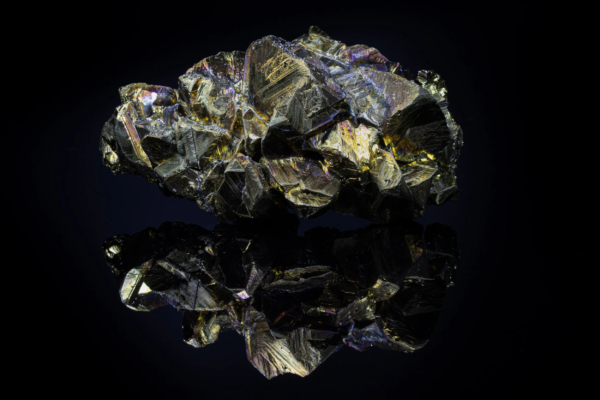
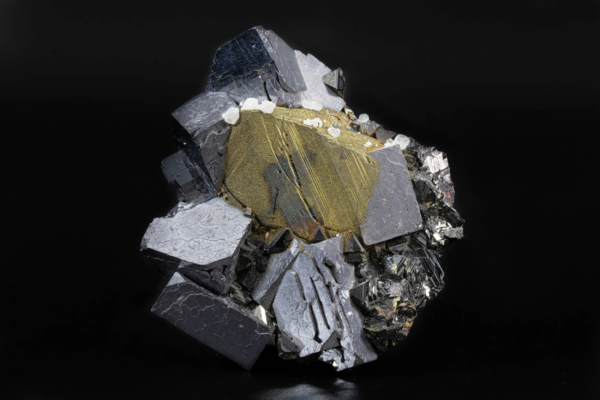
Chalcopyrite is the most important copper ore on Earth, the source of much of the metal in our wires and pipes. Its name means copper pyrite, from the Greek words for copper and for the fire that pyrite strikes. It is a brassy golden yellow, and that shine has fooled many a hopeful eye. Along with pyrite, it is one of the minerals nicknamed fool's gold.
Today
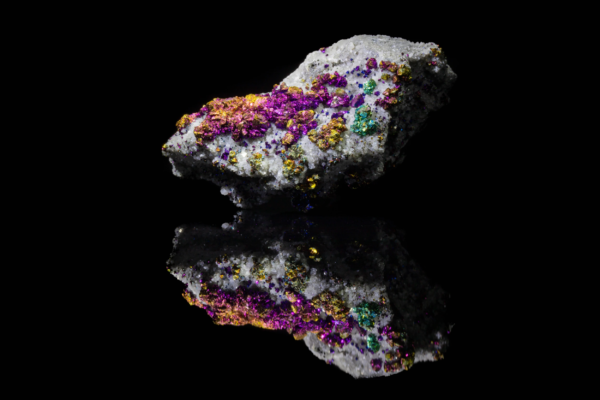
Chalcopyrite is found in nearly every kind of copper deposit, which is why it matters so much. Vast mines around the world grind it up to win the copper inside. On its own it is not a flashy mineral, just a steady golden ore. But it often develops a beautiful tarnish, a shifting film of blue, purple, and gold, and this colorful coating is sometimes sold as peacock ore.
Geology & Occurrence
Formation
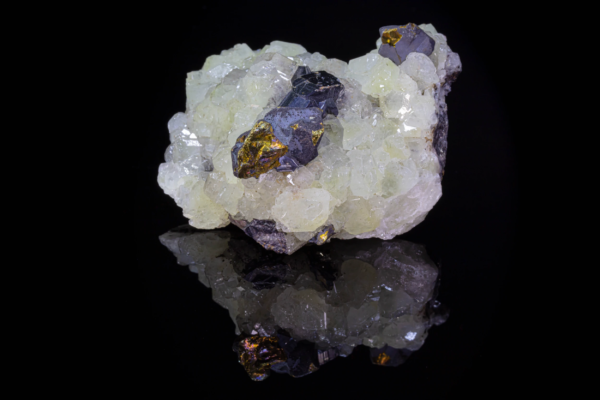
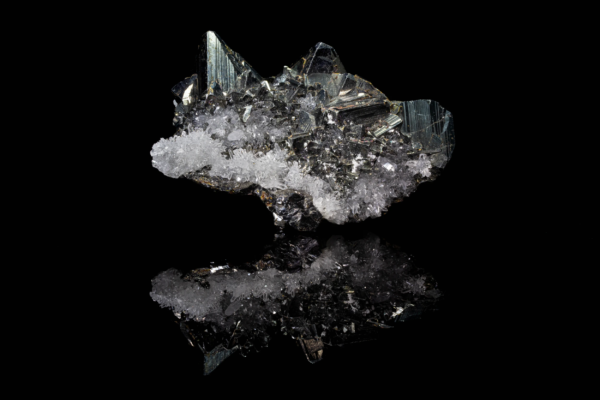
Chalcopyrite forms in a huge range of settings, from hot deep veins to volcanic rocks to layered ore beds. It grows almost anywhere copper and iron and sulfur come together underground. It is usually massive or granular, though it can form small wedge shaped crystals. It keeps company with pyrite, quartz, and the other minerals of copper ore.
Notable Localities
Because chalcopyrite is so common, it turns up in copper districts all over the world. Fine crystals come from England, Mexico, Peru, and the United States, among many others. It is so widespread that almost any large copper mine will have it. For collectors, the best pieces are sharp crystals or specimens with a rich peacock tarnish.
Chalcopyrite is easy to confuse with pyrite and with gold, but a few tests sort them out. Chalcopyrite is softer than pyrite, soft enough to scratch with a knife, where pyrite is not. It is also a deeper, more golden yellow, and it often shows that telltale rainbow tarnish. Real gold, by contrast, is soft but heavy and will not crumble, and it leaves a gold streak rather than a dark one.