Identity
Technical notes (click to open)(click to close)
Name & Human History
Etymology
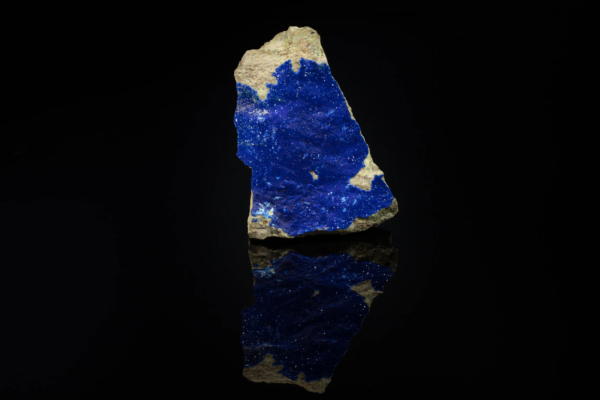
Kinoite is a scarce copper mineral of a soft, light blue. It is a silicate of copper and calcium, and its gentle sky blue sets it apart from the deep blues of azurite or other copper minerals. It was named in 1970 for Father Eusebio Kino, a Jesuit missionary who explored and mapped the lands of Arizona and northern Mexico long ago.
Today
Kinoite is a collector's mineral, and a tiny one. Its crystals are small, growing as little blue blades and fan shaped sprays. They look their best perched on colorless apophyllite, whose sparkle sets off the blue. Most fine kinoite is small enough that a loupe or microscope brings out its true charm, but the color is unlike anything else.
Geology & Occurrence
Formation
Kinoite forms in skarns, where limestone is cooked and altered against an igneous intrusion. Copper rich fluids moving through that zone build the blue crystals in vugs and seams. It also turns up in the gas pockets of old lava flows. In every case it is a mineral of altered, copper bearing rock.
Notable Localities
Kinoite is known from only a few places. The Christmas Mine in Arizona is the source of nearly all good specimens, and the Santa Rita Mountains nearby are the type locality. It has also been found in the copper country of Michigan and at a mine in Japan. Everywhere it is scarce.
Kinoite has a near double that can fool collectors. A mineral called stringhamite is also a blue copper calcium silicate, and the two often grow side by side. They look much alike, but kinoite tends to form fan shaped sprays with fine striations, while stringhamite forms more as separate crystals. Telling them apart is one of the small challenges this blue mineral sets.