Identity
Technical notes (click to open)(click to close)
Name & Human History
Etymology
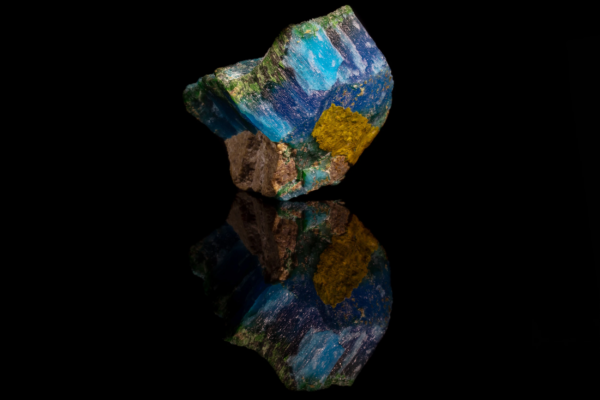
Krohnkite is a rare blue mineral, a sulfate of sodium and copper that also holds water. Its color is a clean sky blue, sometimes leaning toward green. The mineral was named after a German chemist, Kröhnke, who first analyzed it. It comes from the great copper deposits of the Atacama, the bone dry desert of northern Chile.
Today
Krohnkite is a collector's rarity. It is found at only a handful of places, and good crystals are scarce and prized. The most famous come from Chuquicamata in Chile, one of the largest copper mines on Earth, where it once formed prisms several centimeters long. Its bright blue makes it a striking specimen, but a fragile one.
Geology & Occurrence
Formation
Krohnkite forms at the surface, in the oxidized zone of copper deposits. It needs a very dry climate, which is why the rainless Atacama is its home. There, copper, sodium, and sulfate left by evaporating waters join to build the blue crystals. It grows with other copper salts such as chalcanthite and atacamite.
Notable Localities
Krohnkite is known from around a dozen deposits worldwide, but Chile is its heartland. The Chuquicamata mine is the classic source, with other finds scattered across the Atacama region. Elsewhere it is a great rarity, and fine old Chilean crystals are the ones collectors seek.
Krohnkite carries a warning and a charm. Because it holds water and dissolves easily, a specimen must be kept dry, or it will slowly break down and turn dull green. Kept safe, though, it can show a quiet surprise. Its crystals sometimes twin together in pairs that form little heart shapes, a small gift from a rare desert mineral.