Identity
Technical notes (click to open)(click to close)
Name & Human History
Etymology
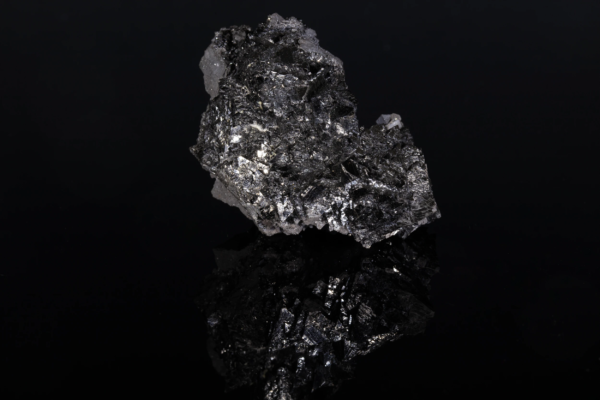
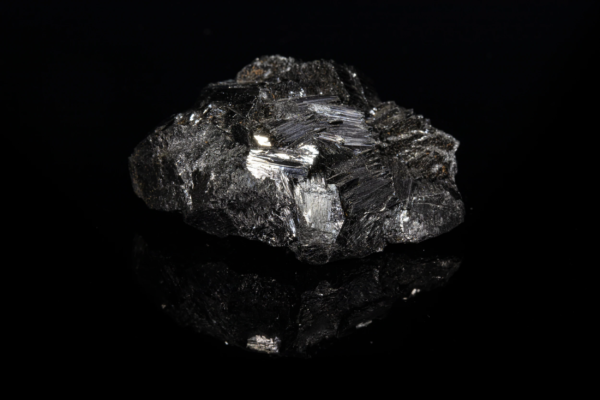
Manganite is a dark, steel gray to iron black mineral, an oxide of manganese that also holds water. It has a bright, submetallic shine and forms striking prisms with deep lengthwise grooves. These crystals often stand together in tight bundles or sheaves. Its name simply points to its manganese content. It is one of several ores of manganese.
Today
Manganite is valued both as an ore and as a collector mineral. Manganese is the metal that toughens steel, and manganite is one source of it, though less important than some others. For collectors, the appeal is its glossy black sheaves of crystals. A fine cluster of bundled prisms, bright and dark, makes a handsome specimen of a mineral that is often dull and massive.
Geology & Occurrence
Formation
Manganite forms in low temperature settings. It grows in veins from cool, mineral rich waters, often with calcite and barite, and it forms where other manganese minerals are altered. Over time it tends to change into pyrolusite, another manganese oxide. The best crystals grew slowly in open veins.
Notable Localities
Manganite has one classic home above all others. The Ilfeld mine in the Harz mountains of Germany produced the world's finest manganite, glossy black sheaves of crystals reaching ten centimeters. Smaller but fine crystals come from South Africa, and good manganite is found in England, France, and the United States.
Manganite has a quiet trick that helps name it. Many dark, metallic minerals look much alike, all black and shiny. But scrape manganite across rough tile and it leaves a streak that is not black but a dark reddish brown. That streak of colored powder sets it apart from look alikes such as pyrolusite, and it is one of the surest ways to know the mineral.