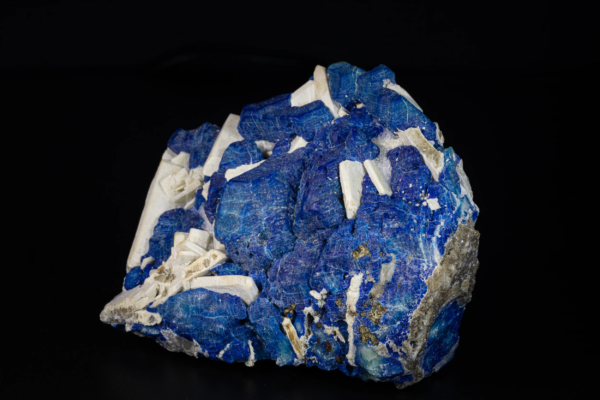
Identity
Technical notes (click to open)(click to close)
Name & Human History
Etymology
Nepheline is a rock building mineral, a silicate of sodium, potassium, and aluminum. It is usually gray, white, or greenish, often with a greasy looking shine. Its name comes from a Greek word for cloud, because of a curious habit. When a piece of nepheline is dropped into strong acid, its surface turns cloudy and milky. That simple test has helped name it for over two centuries.
Today
Nepheline is mostly a mineral for geologists and collectors. Clear glassy crystals are prized by collectors, though good ones are not common. In industry, the rock rich in nepheline is used to make glass and ceramics, where it adds aluminum without too much silica. It has even been studied as a possible ore of aluminum in places where it forms huge masses.
Geology & Occurrence
Formation
Nepheline forms from magmas that are poor in silica. Silica is the stuff of quartz, and most rocks have plenty. But where a magma runs short of it, feldspar cannot fully form, and nepheline grows instead. For this reason nepheline almost never shares a rock with quartz. It is a key mineral of alkaline rocks such as nepheline syenite and phonolite.
Notable Localities
Nepheline comes from silica poor igneous rocks around the world. Beautiful glassy crystals come from the old lavas of Vesuvius in Italy. The largest masses, mined on a great scale, lie in the Kola region of Russia, where nepheline grows with apatite. Big gray crystals come from Bancroft in Ontario, Canada, and good nepheline is found in Norway and Greenland.
Nepheline belongs to a family called the feldspathoids, the silica poor cousins of feldspar. Where there is plenty of silica, a magma grows feldspar and quartz. Where silica runs short, the feldspathoids step in, and nepheline is the most common of them. Its very presence in a rock tells a geologist that the magma was hungry for silica, a clue to how and where it formed.