Identity
Technical notes (click to open)(click to close)
Name & Human History
Etymology
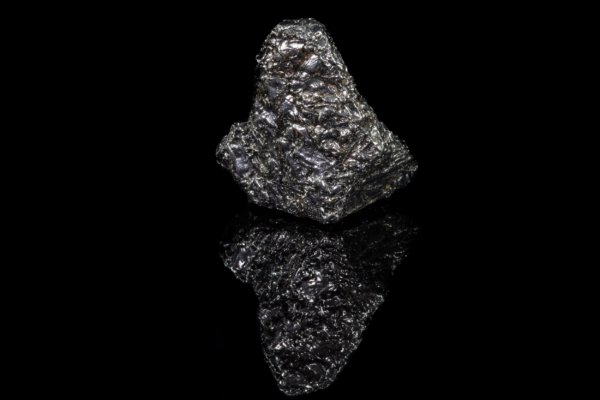
Taenite is a metal mineral from space, an alloy of iron and nickel. It is silvery and dense. On Earth it is found almost only inside iron meteorites. Its name comes from a Greek word for ribbon, after the thin bands it forms. With its partner kamacite, another iron nickel alloy, it builds the striking patterns hidden inside a meteorite.
Today
Taenite is treasured by collectors of meteorites. On its own it is just a silvery metal. But cut and polished, a slice of meteoric iron reveals a stunning crisscross pattern of bands, part taenite and part kamacite. These etched slabs are prized as windows into the heart of a long dead asteroid.
Geology & Occurrence
Formation
Taenite forms deep inside asteroids, in their molten metal cores. As that metal cooled, ever so slowly over millions of years, the alloy began to separate. Bands of low nickel kamacite grew through the high nickel taenite. They locked together into a geometric weave that froze in place as the core went cold.
Notable Localities
Taenite comes only from iron meteorites and the metal grains in stony ones. Famous iron meteorites that show it include Gibeon from Namibia and Canyon Diablo from Arizona. That second one blasted out Meteor Crater. Wherever a metal meteorite is sliced and etched, taenite and kamacite appear together.
Taenite helps make one of nature's most telling patterns. Polish a slice of iron meteorite, brush it with acid, and a geometric weave of bands appears. It is called the Widmanstatten pattern. It forms only when metal cools over millions of years, deep inside a body the size of a planet. Nothing on Earth cools that slowly, so the pattern is a sure sign that a piece of metal fell from space. Its partner alloy, kamacite, is also held in this collection.