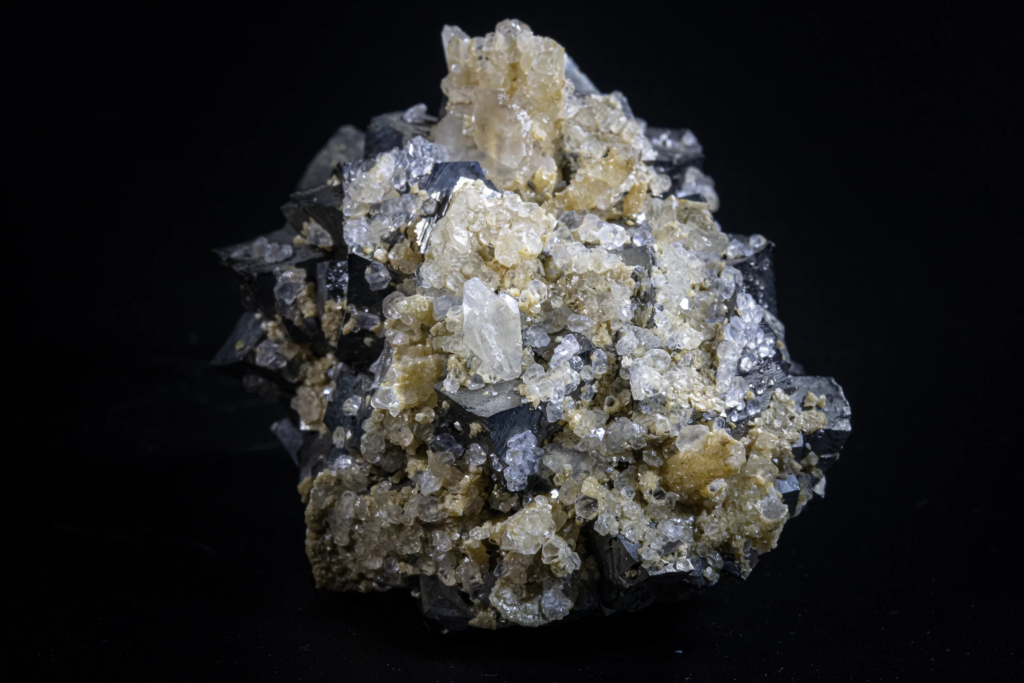
Axinite on Rhodonite


The Specimen
Notes
Mineral Species
Ca4Mn2+2Al4[B2Si8O30](OH)2
Quartz
Talc (1)Diamond (10)
Very hard. Scratches glass and steel.
CaMn3Mn(Si5O15)
Orthoclase
Talc (1)Diamond (10)
Scratches glass. Harder than a steel knife.
Did you know?
Axinite-(Mn)Axinite is named from the Greek for axe, after its sharp wedge-shaped crystals. Heat or squeeze one and it builds a small electric charge, a property called pyroelectricity.
RhodoniteRose-pink rhodonite was a favorite stone of the Russian court, carved into vases and even a vast imperial sarcophagus. The same stone later faced columns in the Moscow metro, carrying a tsarist luxury down into the public subway.