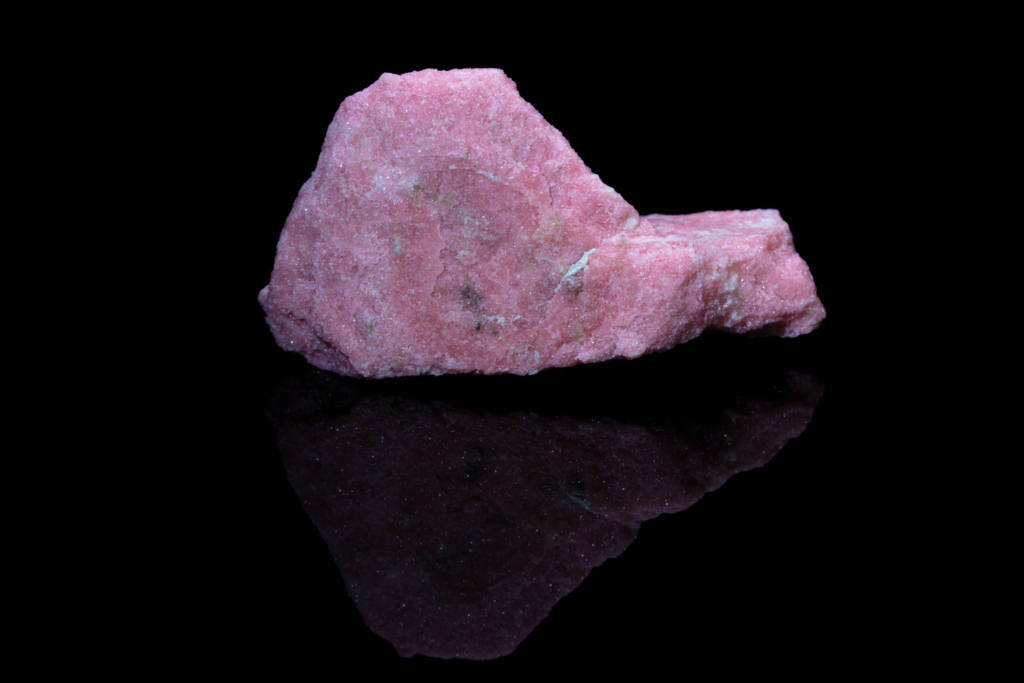
Cavansite on Stilbite
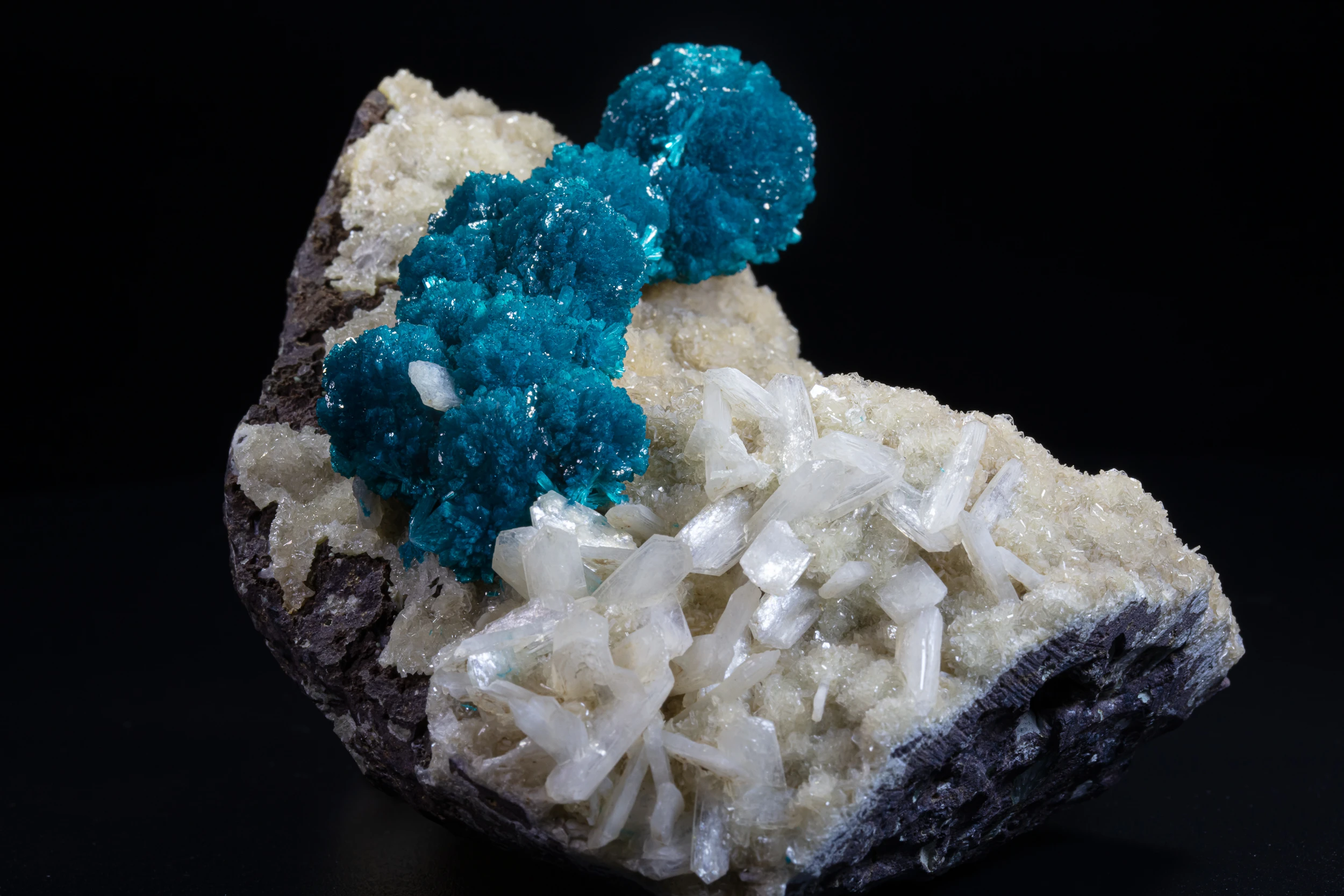
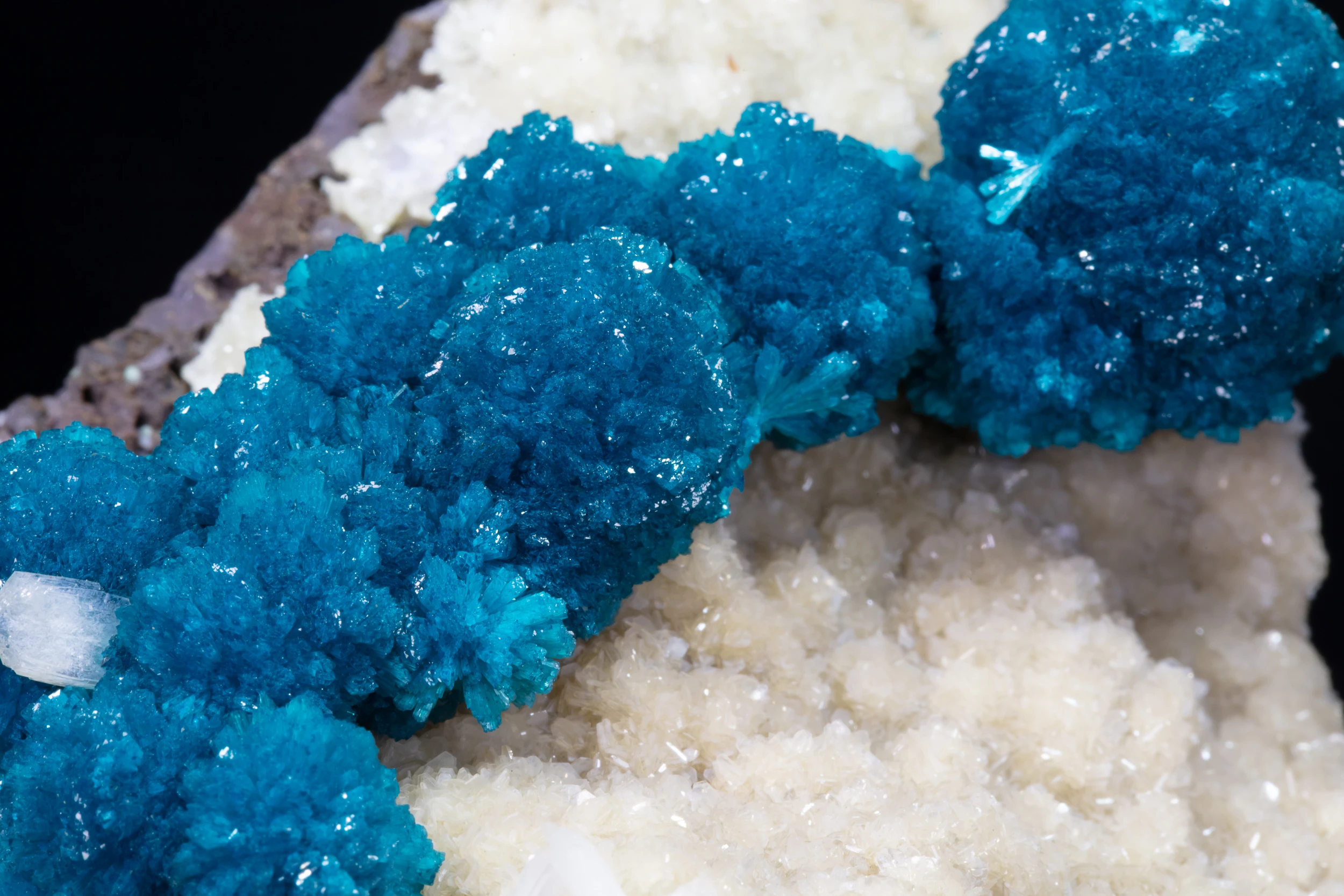
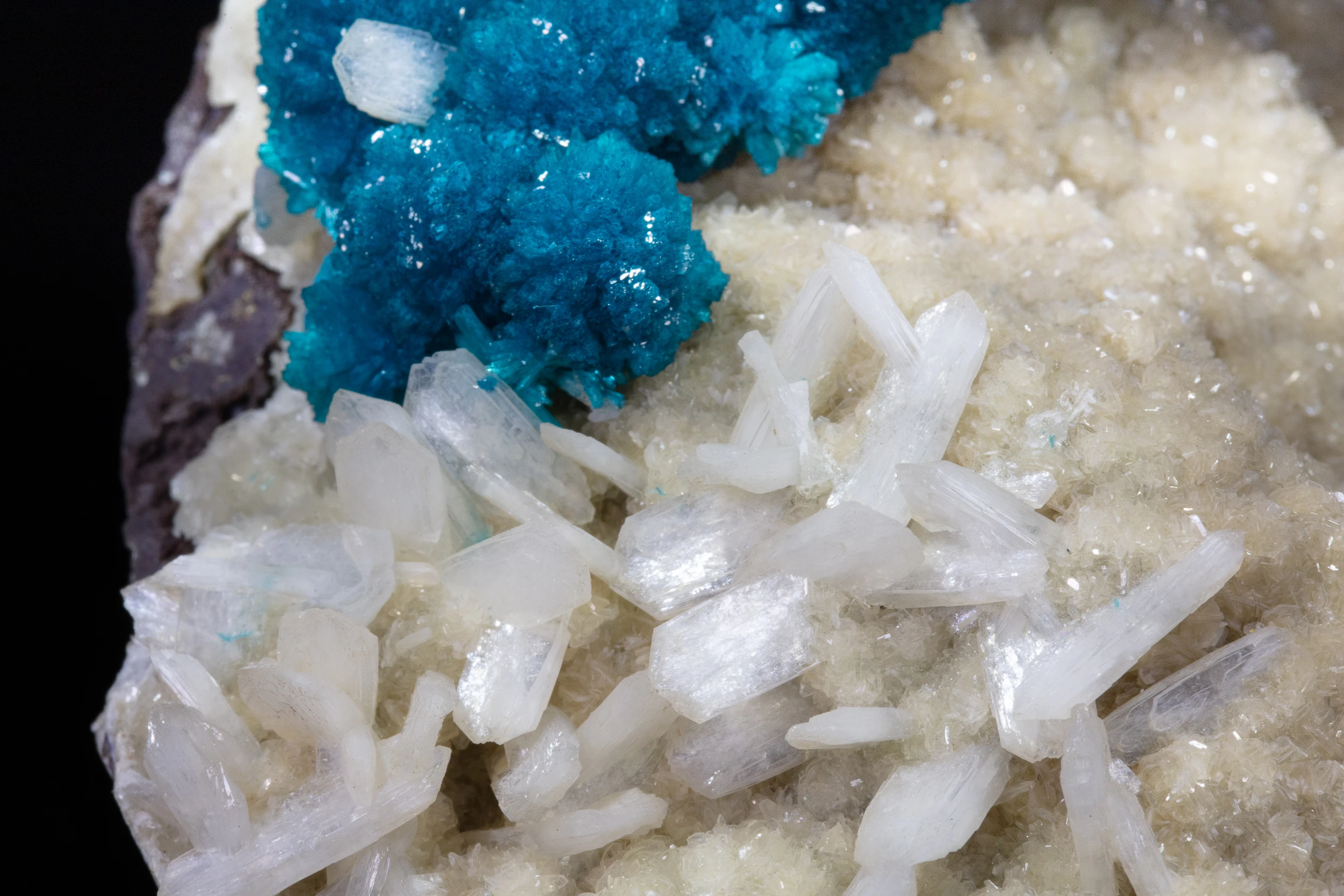
The Specimen
Notes
Mineral Species
Ca(V4+O)(Si4O10)·4H2O
Fluorite
Talc (1)Diamond (10)
Softer than glass. A steel knife scratches it.
NaCa4(Si27Al9)O72·28H2O
Fluorite
Talc (1)Diamond (10)
Softer than glass. A steel knife scratches it.
Did you know?
CavansiteCavansite was discovered by amateur collectors, not scientists. In the fall of 1960, Leslie Perrigo and his wife, from Fruitland, Idaho, noticed a blue mineral coating a rock face in a new roadcut near Owyhee Dam, Oregon. It took until 1973 for it to be published as a new species.
Stilbite-CaStilbite helped name a whole mineral family. Heated, it releases its trapped water and froths as if boiling, the behavior that inspired the word zeolite, literally boiling stone.