Corundum var. Ruby

The Specimen

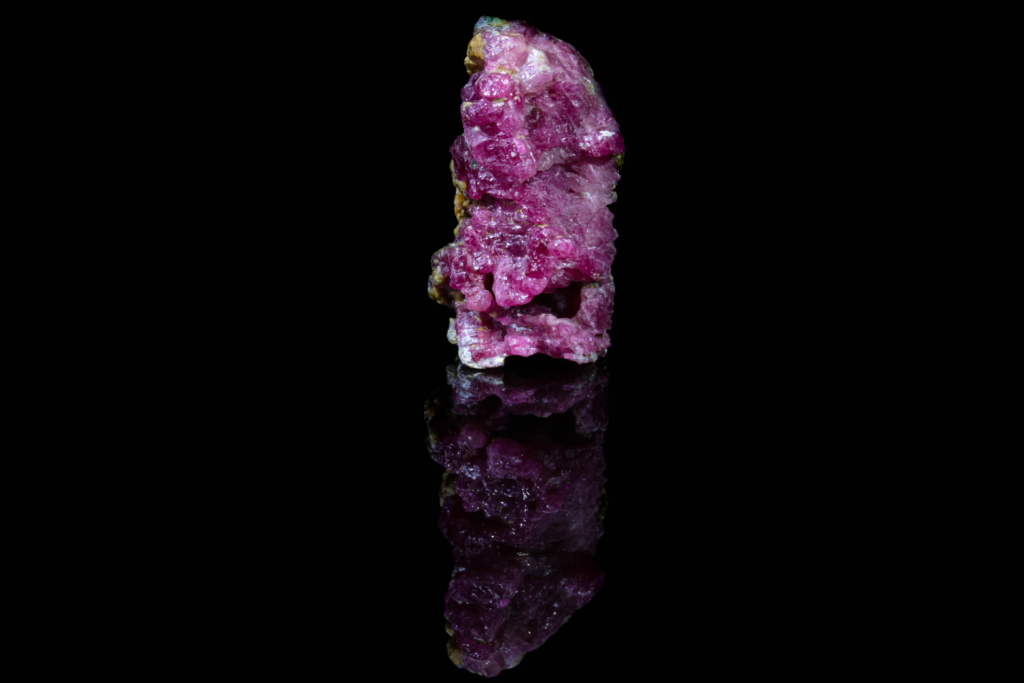
Cabinet: Miniature (2.5 - 4.5 cm) – Size: 4.5 x 2.8 x 2.7 cm Origin: Pein-Pyit, Mogok Township, Pyin-Oo-Lwin District, Mandalay Region – Myanmar

Notes

This specimen comes from Pein-Pyit, a gem-mining village in the Mogok Stone Tract of northern Myanmar, where rubies grow in marble. The Mogok gem mines have been worked for centuries. Marble holds very little iron, and iron dims a ruby's glow, so marble-hosted rubies fluoresce red even under the ultraviolet light in ordinary sunlight, which makes their color look stronger.
Ruby is the red variety of corundum, an aluminum oxide colored by traces of chromium. Corundum is harder than any other natural mineral except diamond.
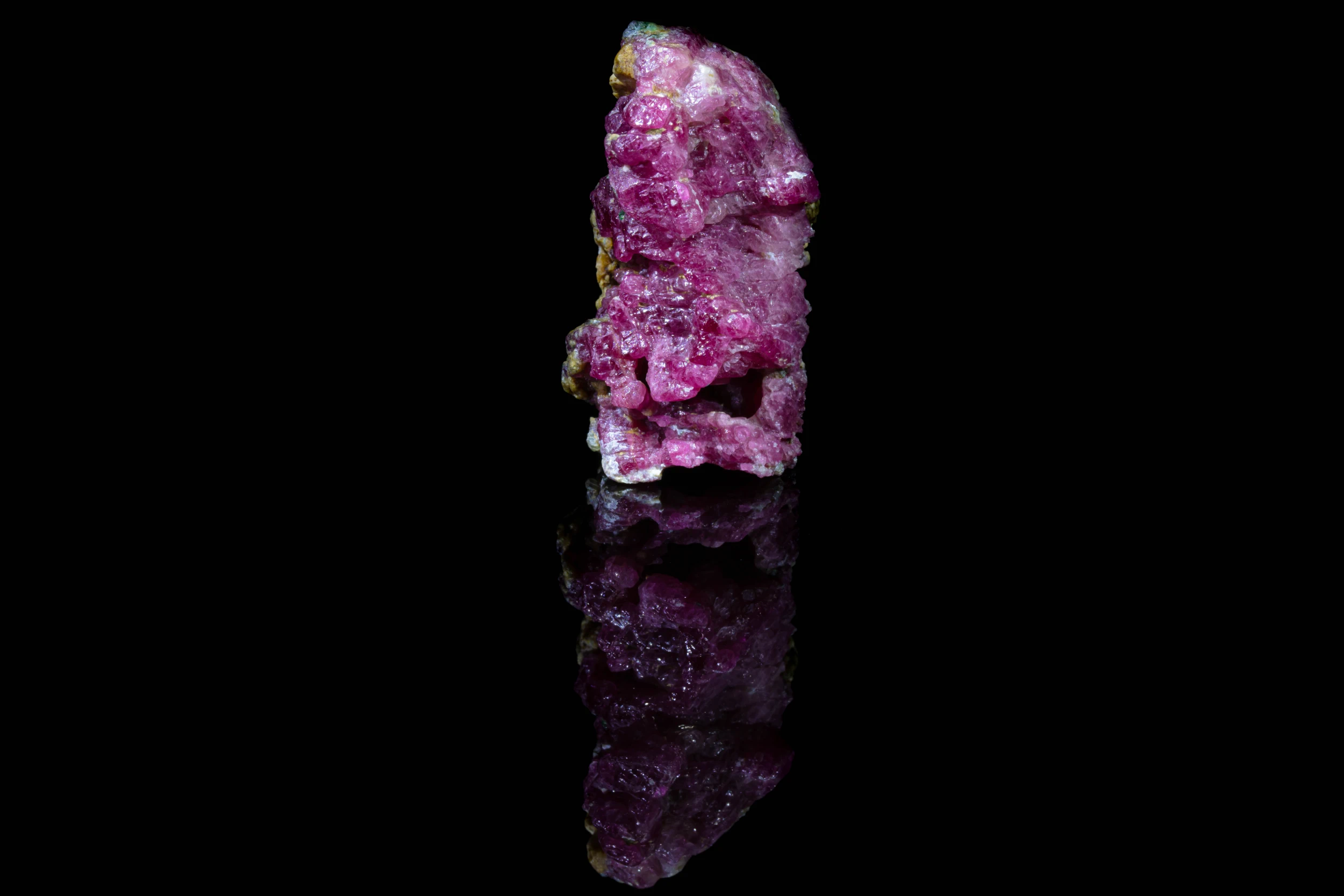
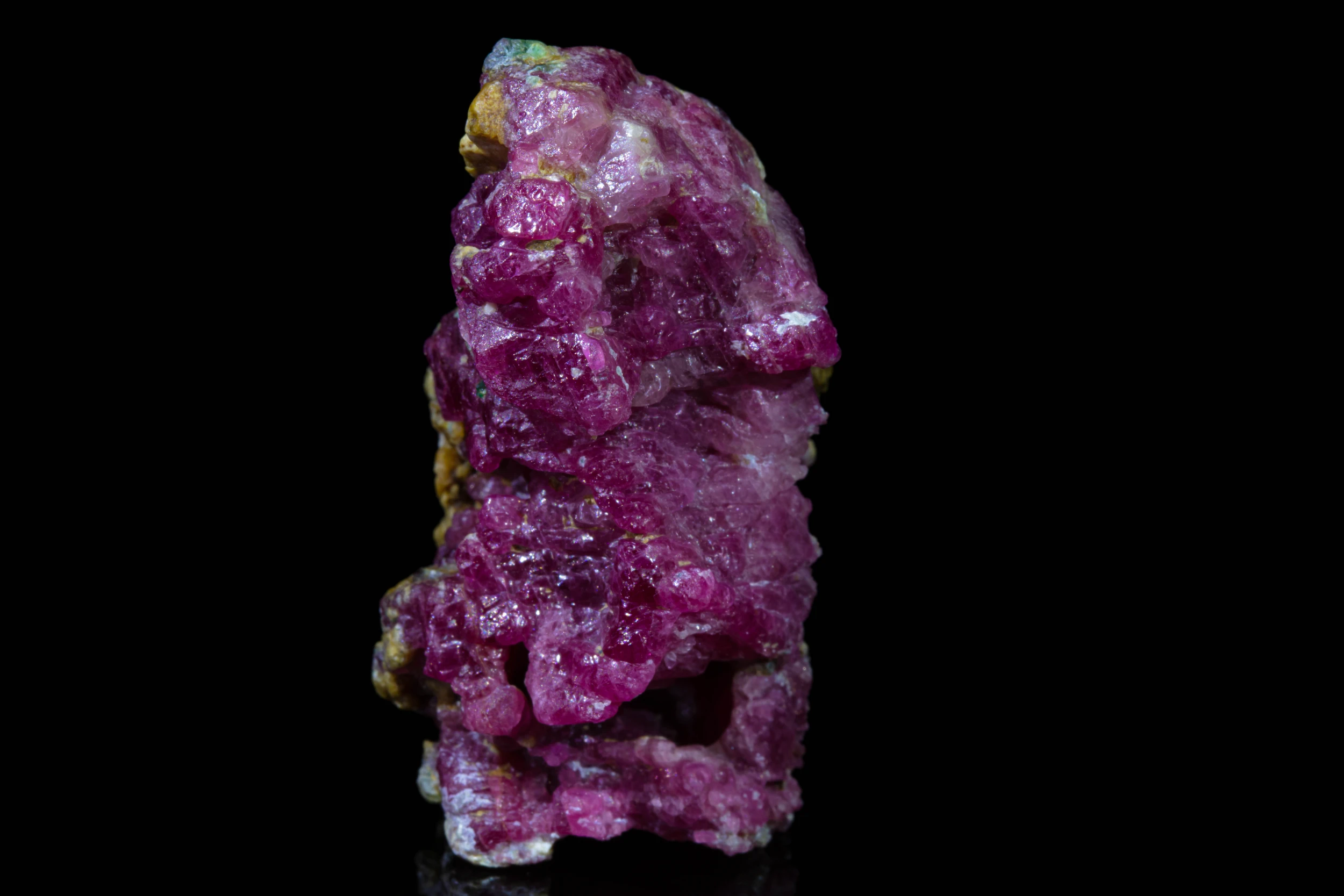
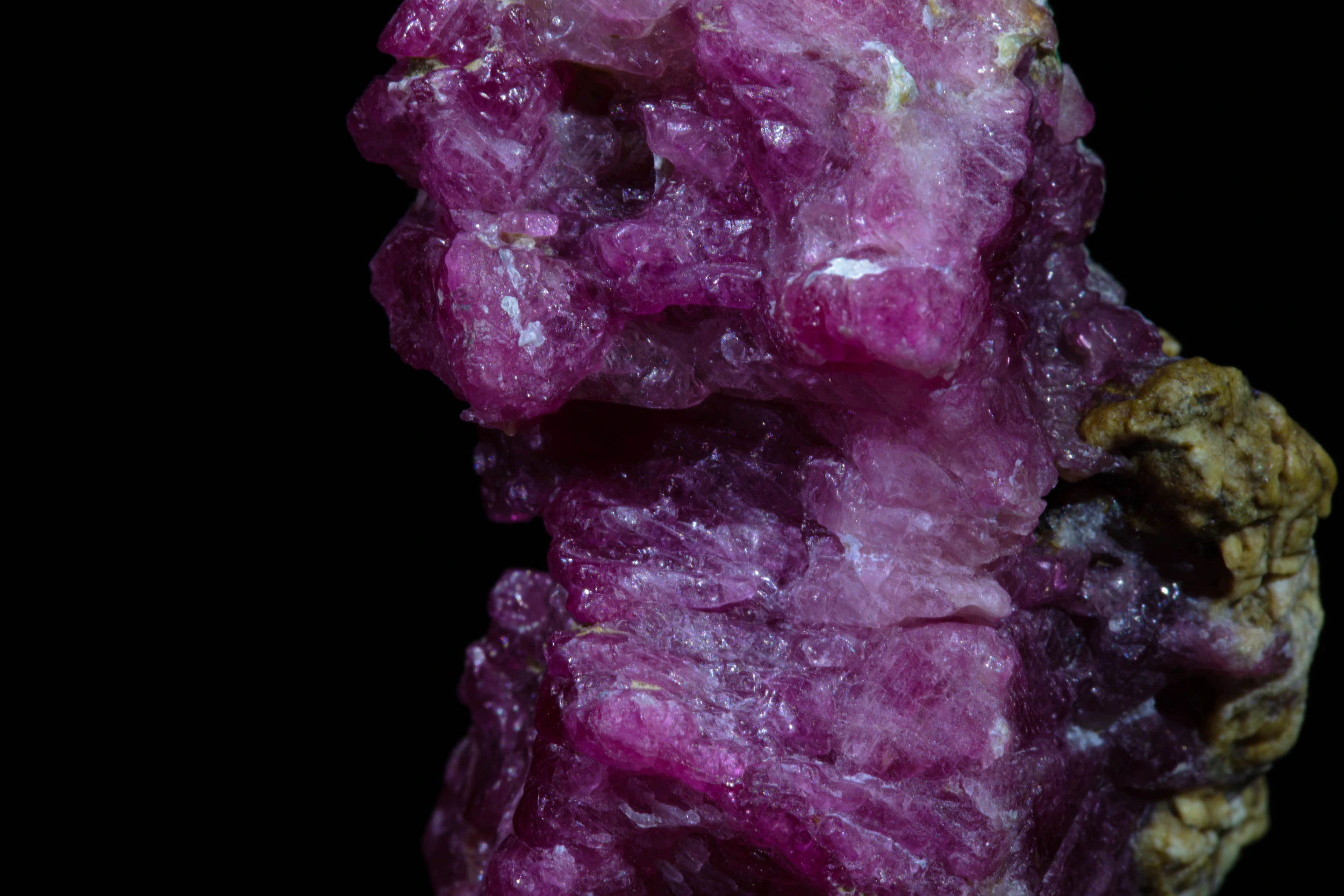
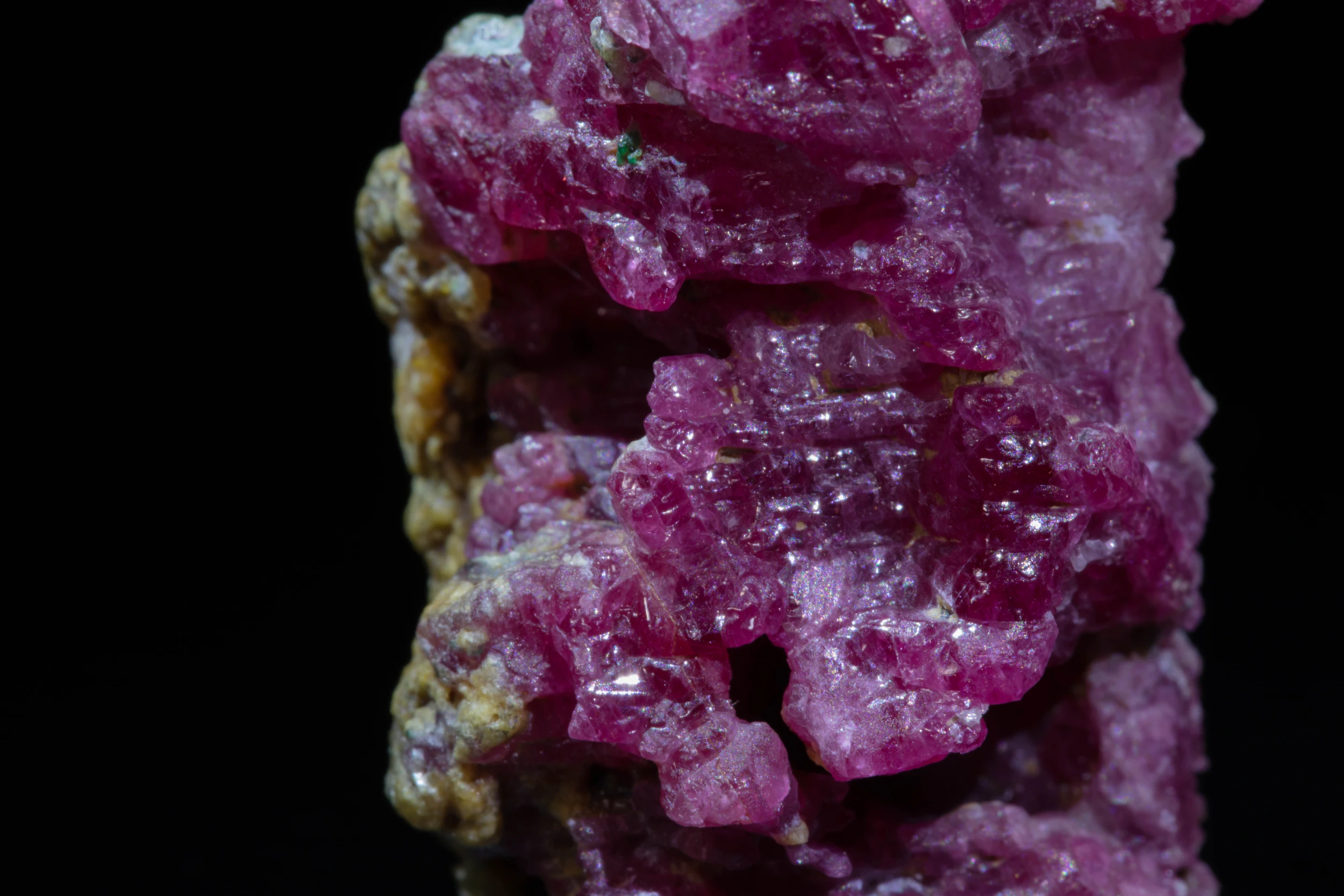
Here, instead of a single neat crystal, the ruby forms a rough column of stacked, rounded crystals grown into one another, so closely that it is hard to tell where one ends and the next begins. The color is a deep raspberry red with good translucency and a waxy luster, with a little yellow-brown matrix on one side. According to the dealer, the column glows an intense hot pink-red under long-wave UV light.

Mineral Species

Al2O3
Elements: Aluminum, Oxygen
Class: Oxides
Crystal System: Trigonal
Hardness: 9
Corundum
Talc (1)Diamond (10)
Among the hardest minerals. Only diamond is harder.

Did you know?

CorundumThe same mineral that makes ruby and sapphire also makes emery, the dark grit on sandpaper and grinding wheels. For centuries, ranking just below diamond in hardness, corundum was how people ground and polished nearly everything else, including softer gems. The stone in a fine ring and the grit on a workshop wheel are one and the same mineral.

RubyLook inside a mechanical watch and you will find rubies. The tiny bearings that its moving parts turn on, the jewels a watch is counted by, are synthetic ruby, chosen because it is hard, smooth, and wears almost forever. The same stone set in a crown does humble, hidden work keeping time.