Cuprosklodowskite

The Specimen

Origin: Musonoi Mine, Kolwezi, Lualaba – Congo (DRC)

Notes

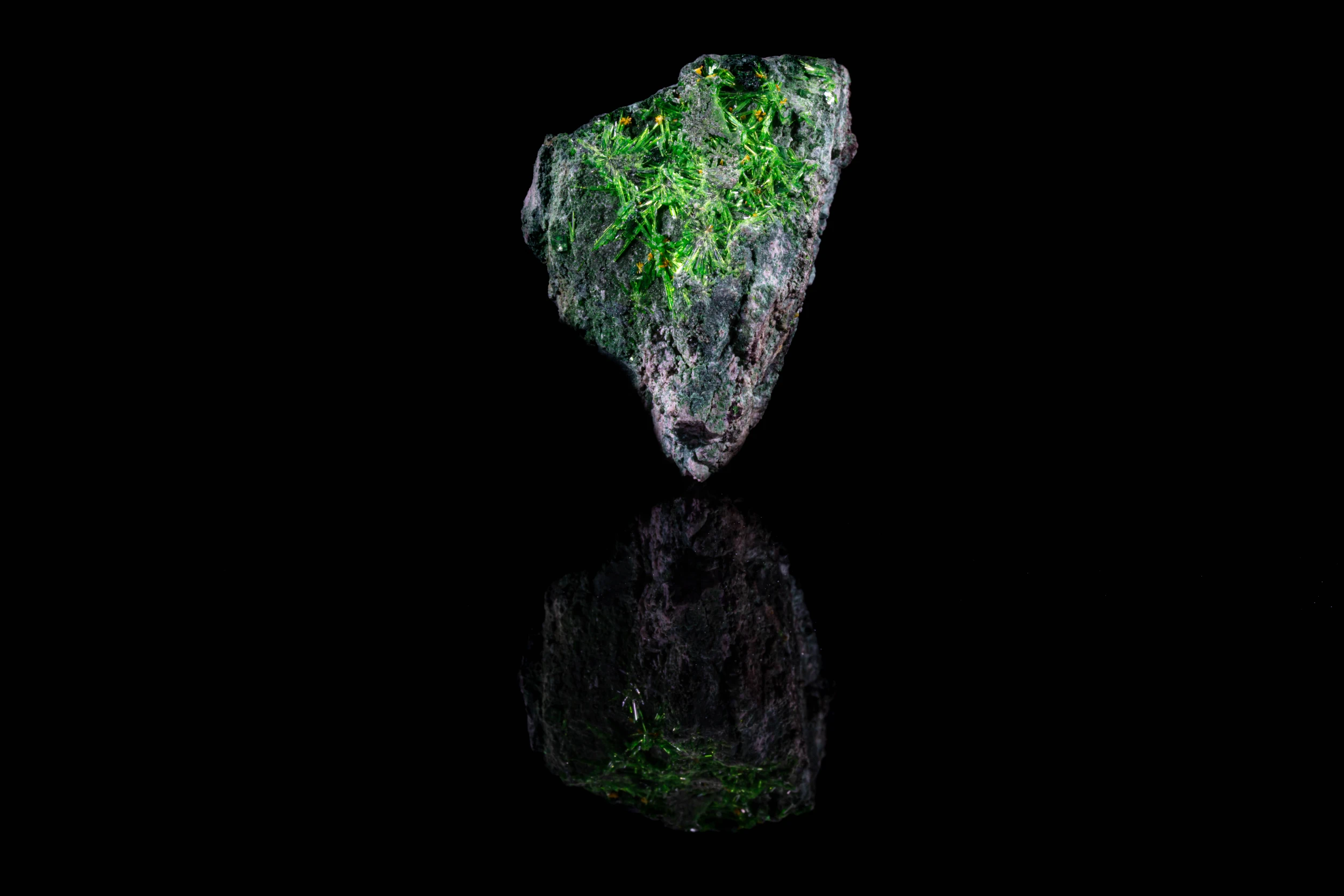
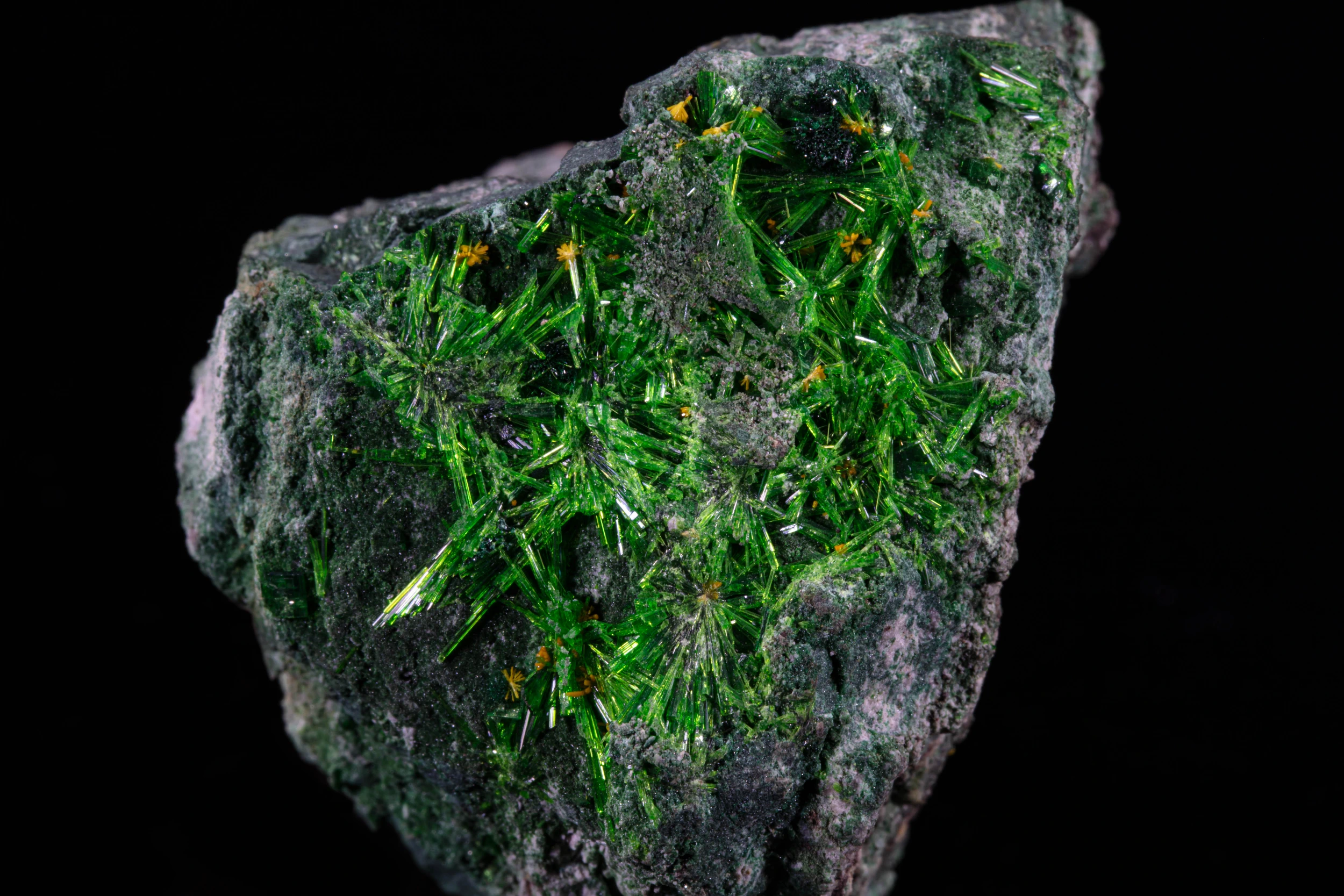
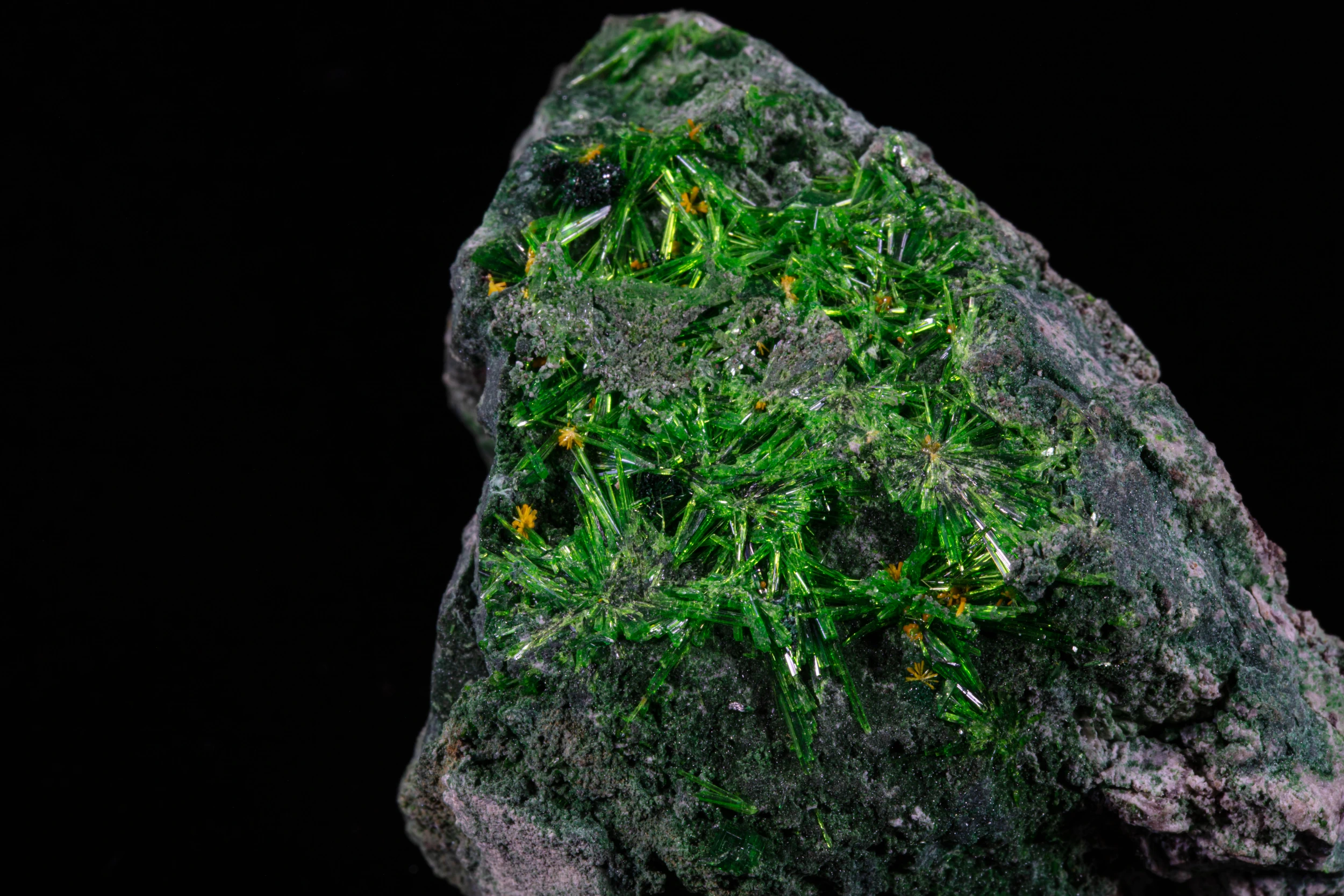
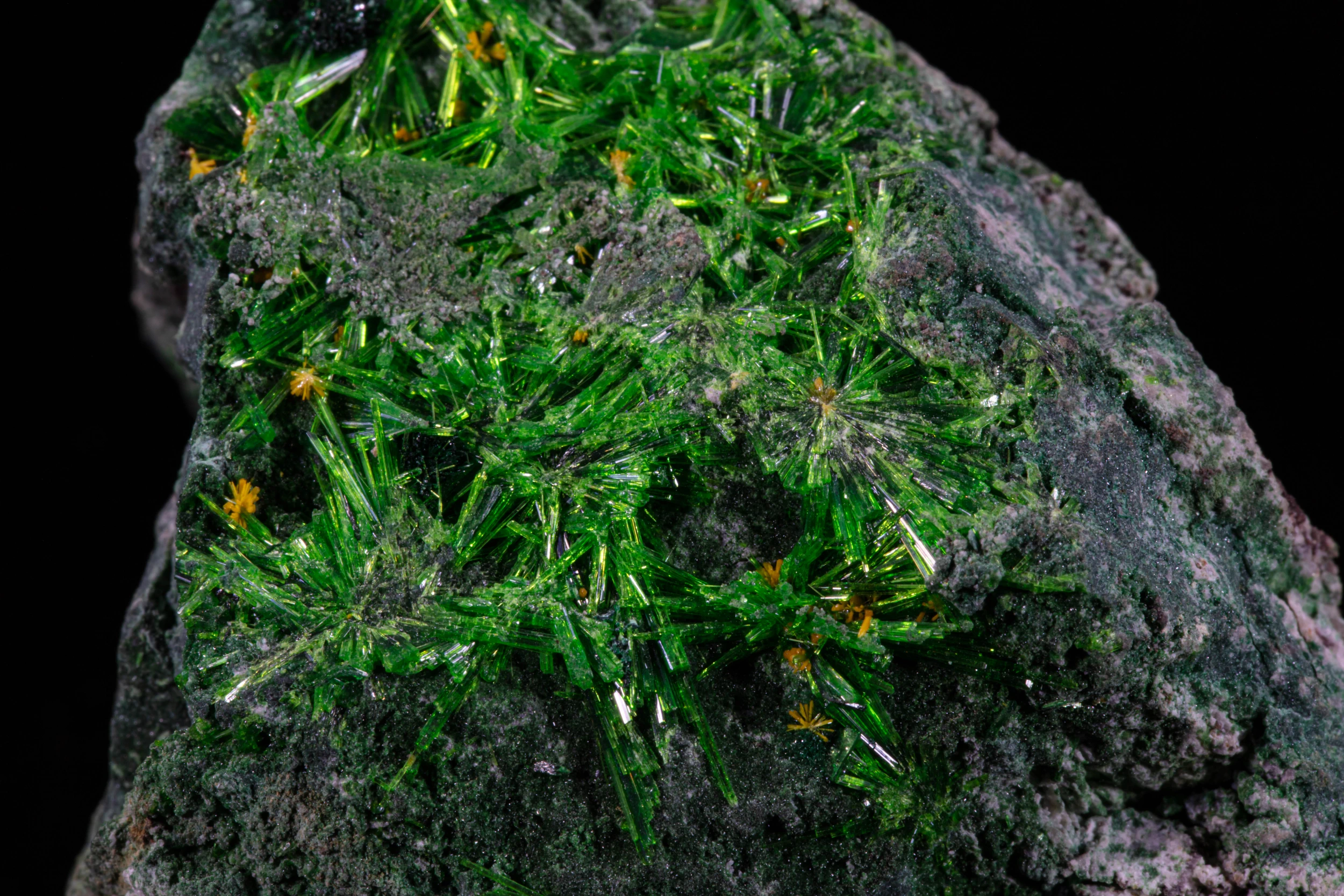
Long, slender, grass-green cuprosklodowskite needles grow in radiating sprays across a dark gray matrix. Tiny orange-yellow sprays are scattered among them. They have not been identified, but their color and shape suggest kasolite, a lead uranium silicate often found with cuprosklodowskite at this mine. Cuprosklodowskite was first described in 1933 from the Kalongwe deposit, in the same Katanga region. The Musonoi Mine, near Kolwezi in the western part of the Katanga Copperbelt, is famous for its secondary uranium minerals, and also for rare selenium and palladium minerals.

Mineral Species

Did you know?

Cuprosklodowskite is named for Marie Sklodowska-Curie. Behind its soft grass-green needles sits a startling number: more than half the mineral's weight is pure uranium.